Palazzo Colonna: I like my palazzo with a side of cannonball.
Palazzo Colonna - Michael Adair
The Historical Seat
Palazzo Colonna - Michael Adair
The Palazzo Colonna is one of the oldest and largest private palaces in Rome. The Colonna family has resided on this site for eight centuries.
The construction of the complex began in the thirteenth century under the direction of Cardinal Giovanni Colonna. The buildings were erected directly on the ruins of the ancient Roman Temple of Serapis. This ancient foundation provided the physical base for a residence that would house thirty one generations of the same family.
The palace gained significant political importance in 1417 when Oddone Colonna was elected as Pope Martin V. He established his pontifical seat within the family residence. This act transformed the private palace into the center of power for the Catholic Church for over a decade.
The structure saw continuous expansion and renovation for five hundred years. This resulted in a mix of architectural styles that documents the changing tastes of the Roman aristocracy from the medieval period to the Baroque era.
Palazzo Colonna - Michael Adair
Today, the palace remains a private residence where Prince Prospero Colonna and his family continue to live.
The Apartment of Princess Isabelle
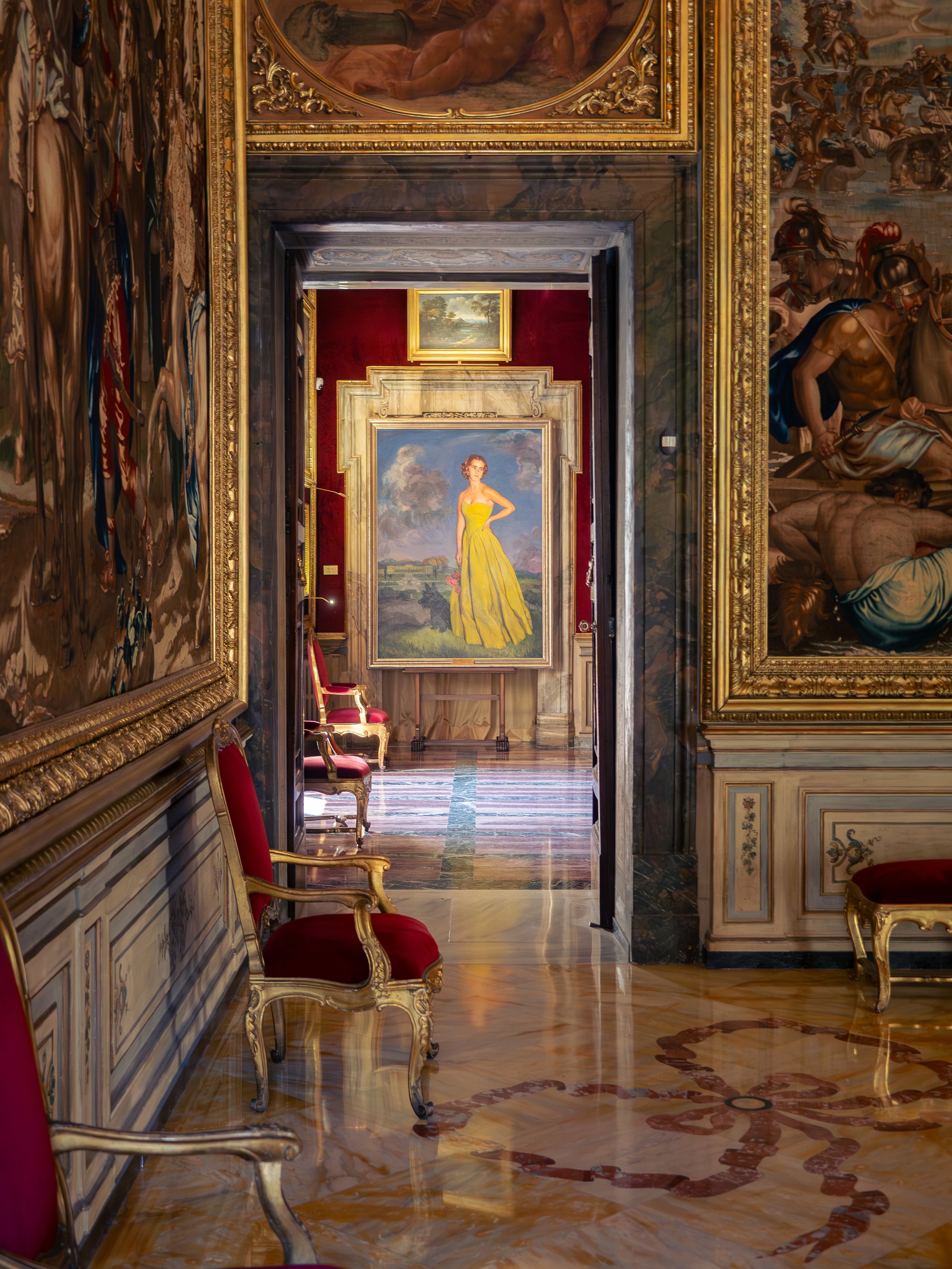
The palazzo includes the Apartment of Princess Isabelle located on the ground floor. This suite of frescoed rooms retains the original floors and preserves the atmosphere of the seventeenth century. These rooms served as the primary residence for Princess Isabelle Colonna until 1984.
Born Isabelle Sursock into a prominent aristocratic family in Beirut, she married Prince Marcantonio Colonna in 1909. She rapidly became the matriarch of the dynasty and a formidable force in Roman society for over seventy years. She was widely regarded as the last true queen of Rome and maintained a private court that rivaled the Vatican in terms of exclusivity and protocol.
Her influence was such that she received heads of state and royalty, including Queen Elizabeth II, within these private apartments. Isabelle dedicated her life to the preservation of the palazzo and the art collection, protecting the family heritage through the turbulent periods of two world wars.
Palazzo Colonna - Michael Adair
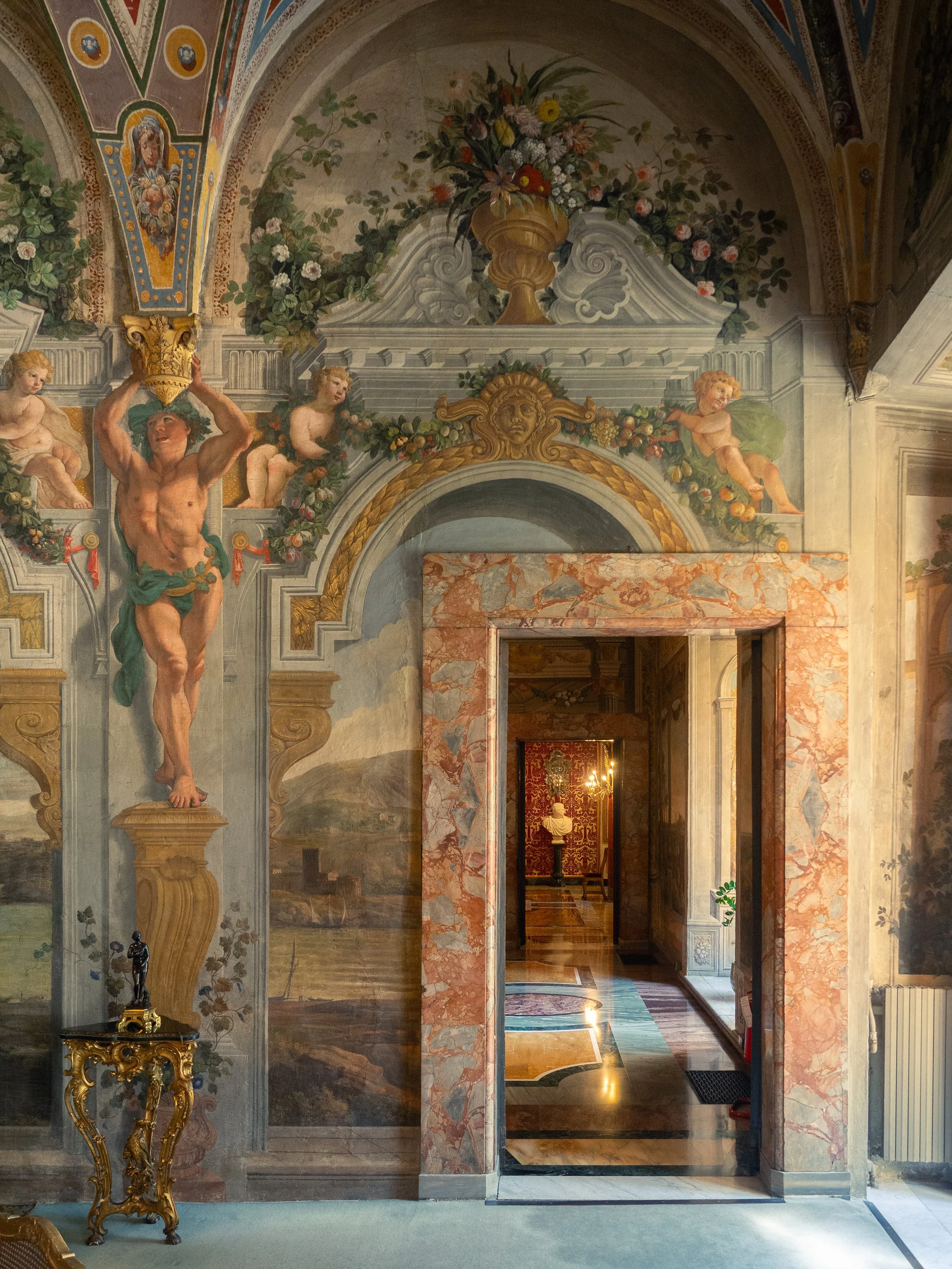
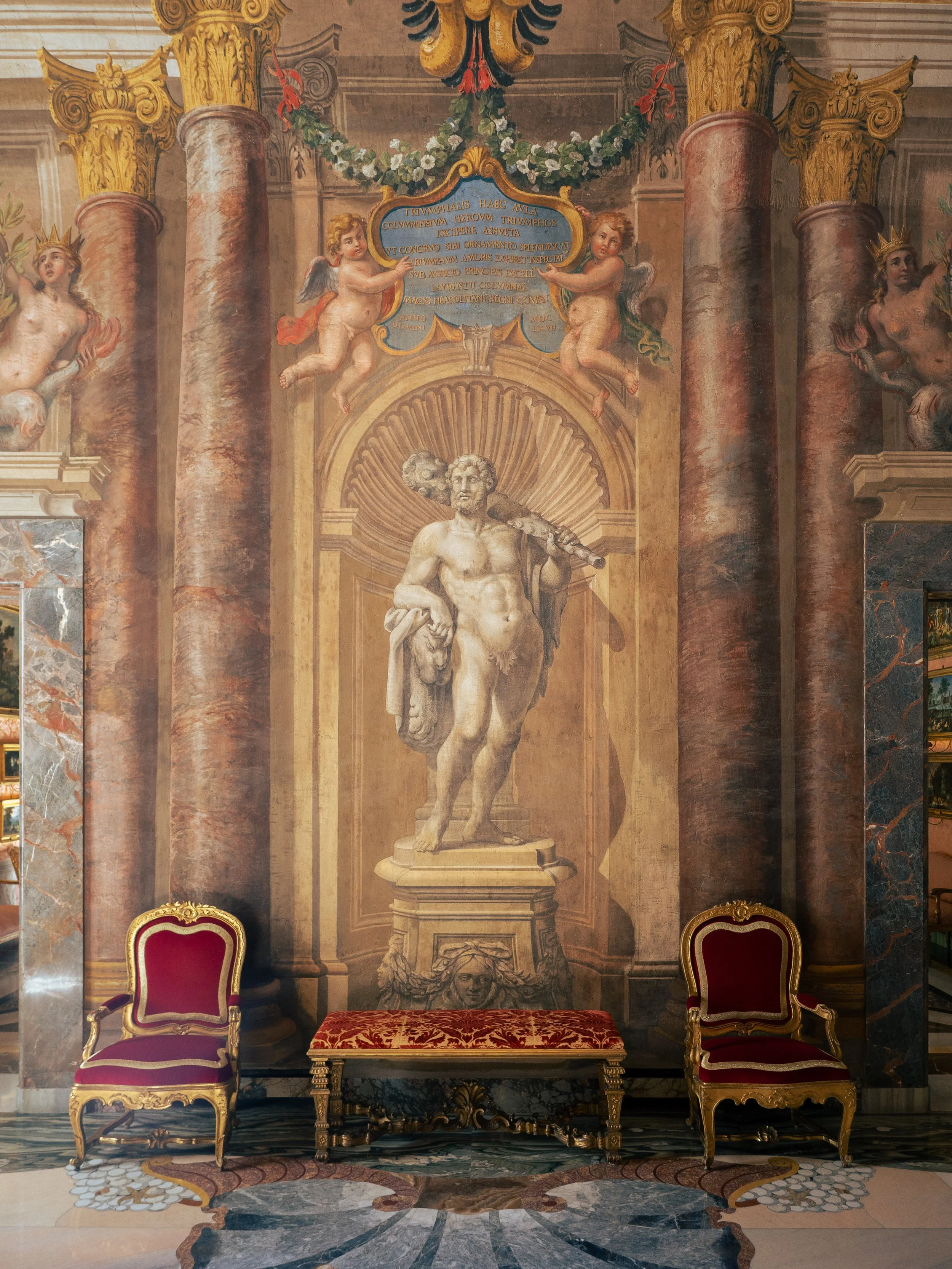
The artistic density of these rooms is extraordinary. The ceilings are covered with elaborate frescoes painted by some of the most celebrated painters of the Roman Baroque, including Pinturicchio, Cavalier Tempesta, and Crescenzio Onofri. The paintings cover almost every square inch of each room.
In the Hall of the Fountain, the walls disappear into lush landscapes and illustrated gardens that seem to extend the physical space of the room into the outdoors. This creates an immersive environment where nature and architecture come together seamlessly. Unlike the formal grandeur of the upstairs gallery, these rooms feel intimate and personal.
They house a collection of thirty seven views of Rome by Gaspar van Wittel, known as Vanvitelli, which is the largest private collection of his work in the world.
The apartment also features a canopy room with family portraits and a ballroom where the Princess entertained the elite of Europe, keeping the space vibrant and occupied well into the modern era.
These apartments are not always open to the public, so be sure to check before you book your tickets as the are absolutely worth the visit.
Palazzo Colonna - Michael Adair
The Galleria Colonna
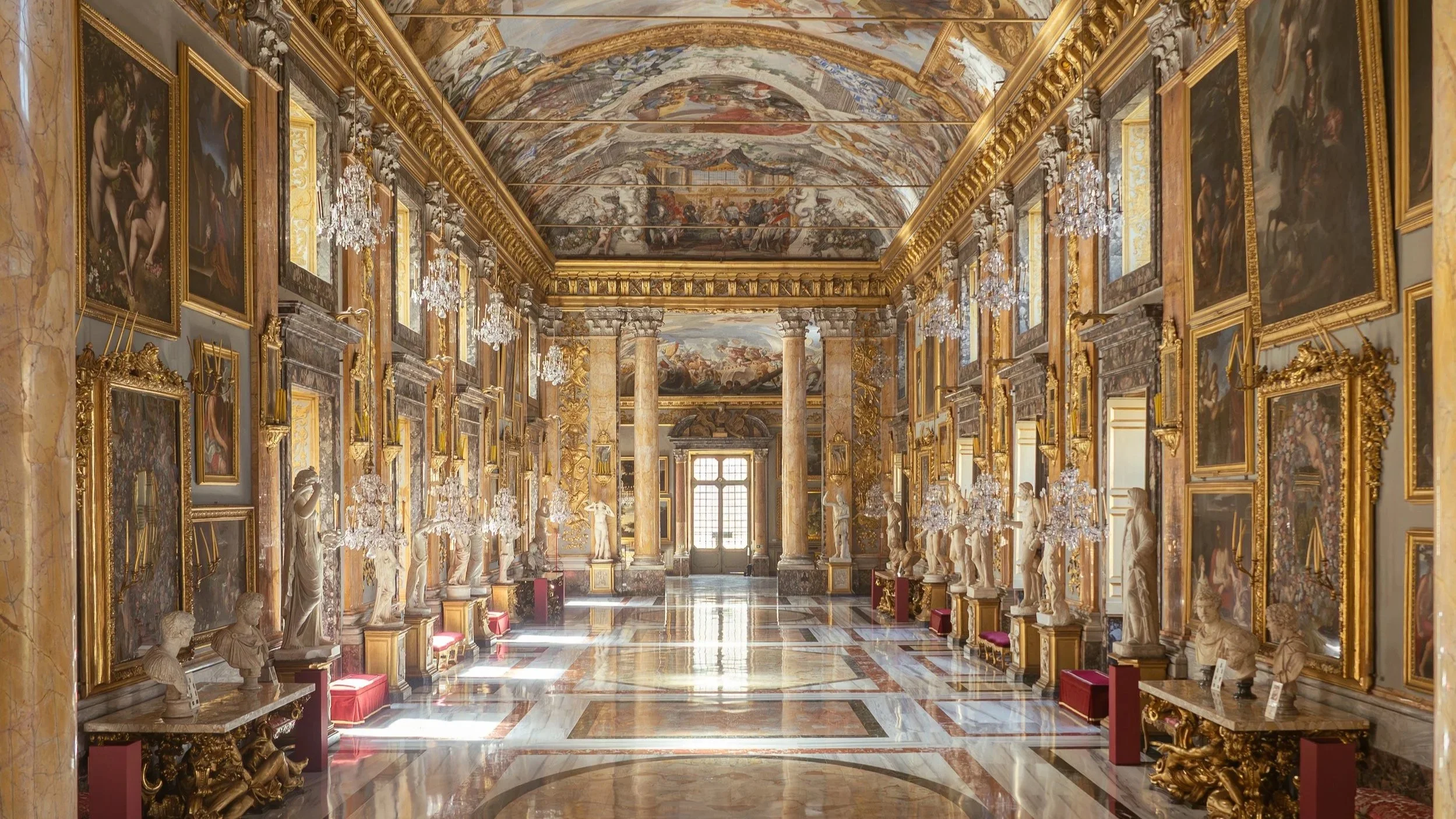
The defining feature of the residence is the Great Hall, known as the Galleria Colonna. Commissioned in 1654 by Cardinal Girolamo I Colonna, the space was completed in 1700 under the guidance of the architect Antonio del Grande and later Girolamo Fontana.
The primary function of the hall was to display the family art collection and to commemorate the victory of the Christian fleet over the Ottoman Turks at the Battle of Lepanto in 1571.
The commander of the papal fleet during this battle was Marcantonio Colonna II. The vault of the Great Hall features a massive fresco cycle dedicated to this naval triumph, executed by Giovanni Coli and Filippo Gherardi.
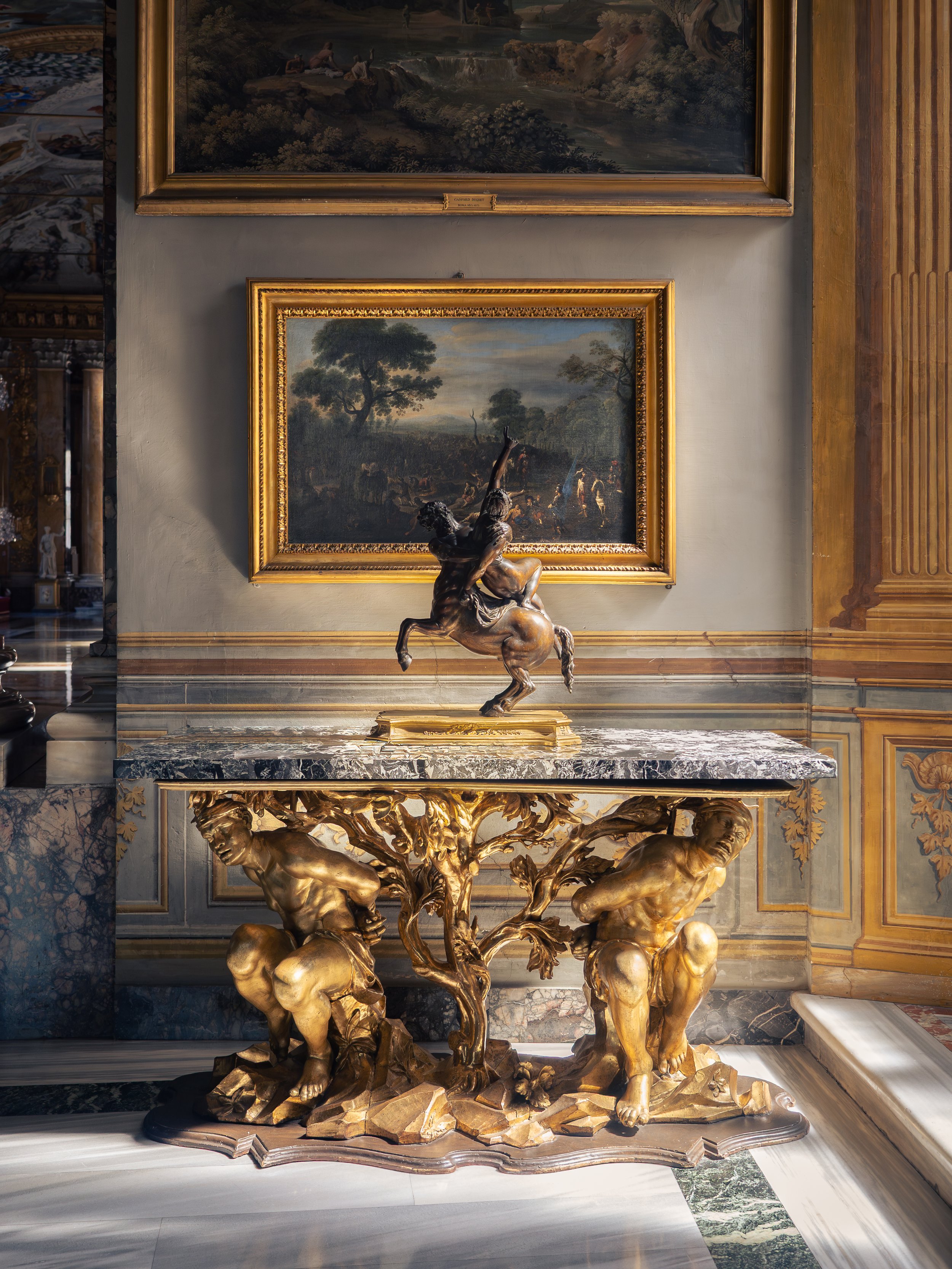
The iconography reflects the intense religious and military hostility of the time. The hall contains numerous carved wooden figures depicting enslaved and chained Ottoman Turks. These statues are used as supports for heavy wall tables and vases throughout the gallery.
These racialized caricatures of the defeated enemy serve as a permanent reminder of the military conquest. While intended as symbols of victory in the seventeenth century, they have not kept well and present a jarring and problematic display of subjugation to the modern observer.
The dimensions of the Galleria are substantial. It measures 76 meters (249 feet) in length, 13 meters (43 feet) in width, and 10 meters (33 feet) in height. For context, the Hall of Mirrors at the Palace of Versailles is 73 meters long. This makes the Galleria Colonna slightly larger than its French counterpart.
The space is lined with mirrors painted with flowers by Mario dei Fiori and Giovanni Stanchi, interspersed with statues and paintings by artists such as Guercino and Salvator Rosa.
Palazzo Colonna - Michael Adair
The Iron Souvenir
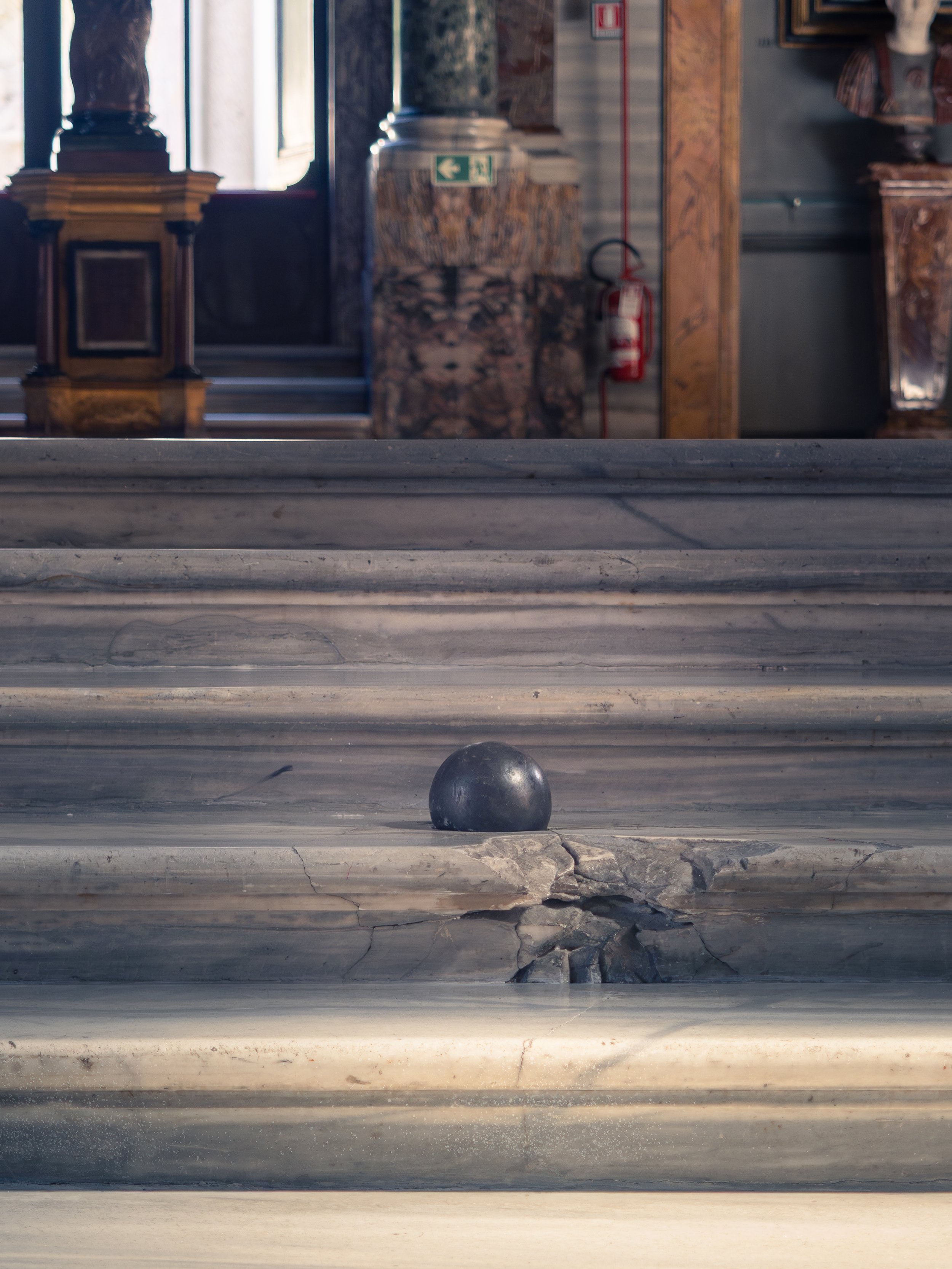
A single black sphere rests on the short flight of stairs connecting the Great Hall to the Room of the Column. This object is a solid iron cannonball fired by the French army during the siege of Rome in 1849.
The conflict arose when the Roman Republic seized control of the city, forcing Pope Pius IX to flee into exile.
The French General Oudinot responded by laying siege to Rome to restore papal authority. His artillery bombarded the city center from the strategic heights of the Janiculum Hill located across the Tiber River.
One cannonball crashed through a large window in the Gallery, flew across the entire width of the hall, and lodged itself into the marble steps.
The Colonna family chose not to repair the fractured marble or remove the cannonball. Instead, they fixed the cannonball exactly where it landed.
It remains embedded in the step today as a permanent historical record of the Risorgimento and the defense of the Papacy.
Practical Information
Opening Times: Public access is restricted to Saturday mornings only. The opening hours are from 9:00 AM to 1:15 PM, with the final entry permitted at 12:15 PM.
Tickets: Book in advance through the official website.