Musée Gustave Moreau: The House of the Last Symbolist
Musee Gustave Moreau - Michael Adair
Musee Gustave Moreau - Michael Adair
If you walk deep into the 9th arrondissement, past the rows of standard Parisian apartments on the Rue de la Rochefoucauld, you eventually hit number 14. From the pavement, it looks like a typical, dignified townhouse, but the interior is one of the most obsessive and densely packed spaces in the city.
Gustave Moreau was a painter who lived and worked here for the better part of his life. He wasn’t just an artist; he was a man who was deeply concerned with the longevity of his legacy. In 1895, near the end of his life, he commissioned the architect Albert Lafon to radically renovate the top two floors of the family home to create massive, light-filled studios.
He died in 1898, leaving the house and its entire contents, some 15,000 works, to the state. He made it very clear that the arrangement of the rooms was to be preserved exactly as he left them.
The transition from the narrow, residential street into this private monument is intentionally jarring. You move from the grey stone of the exterior into a world that feels like a cross between a royal treasury and a Victorian laboratory. It is a rare example of a space that hasn't been "museumified" into a sterile gallery; instead, it retains the heavy, lived-in atmosphere of a man who spent his final years curating his own ghost.
By essentially turning his home into a fortress for his art, Moreau ensured that the public would be forced to see his work on his terms, surrounded by the furniture and the silence he chose for himself.
Musee Gustave Moreau - Michael Adair
The Private Apartments
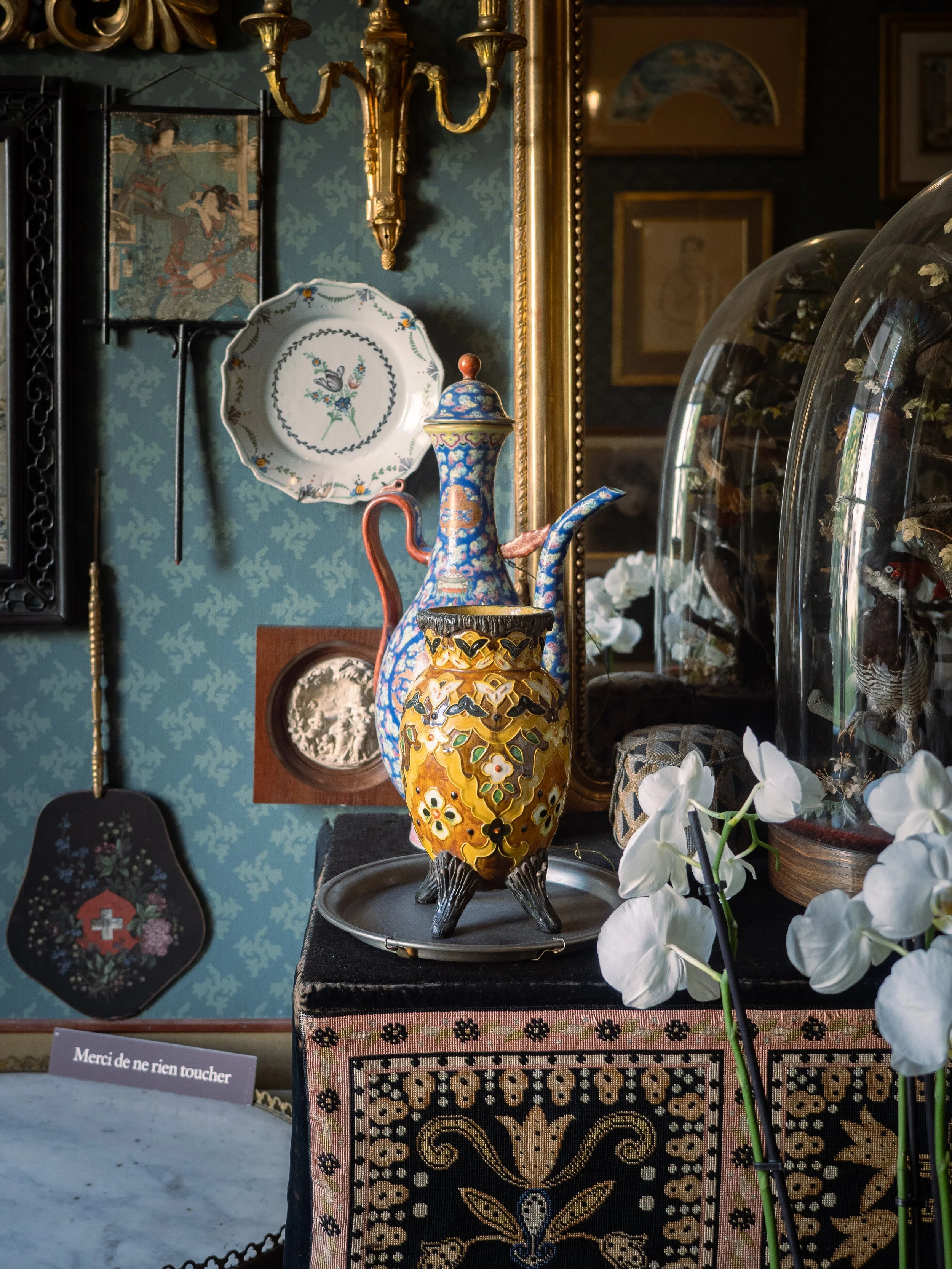
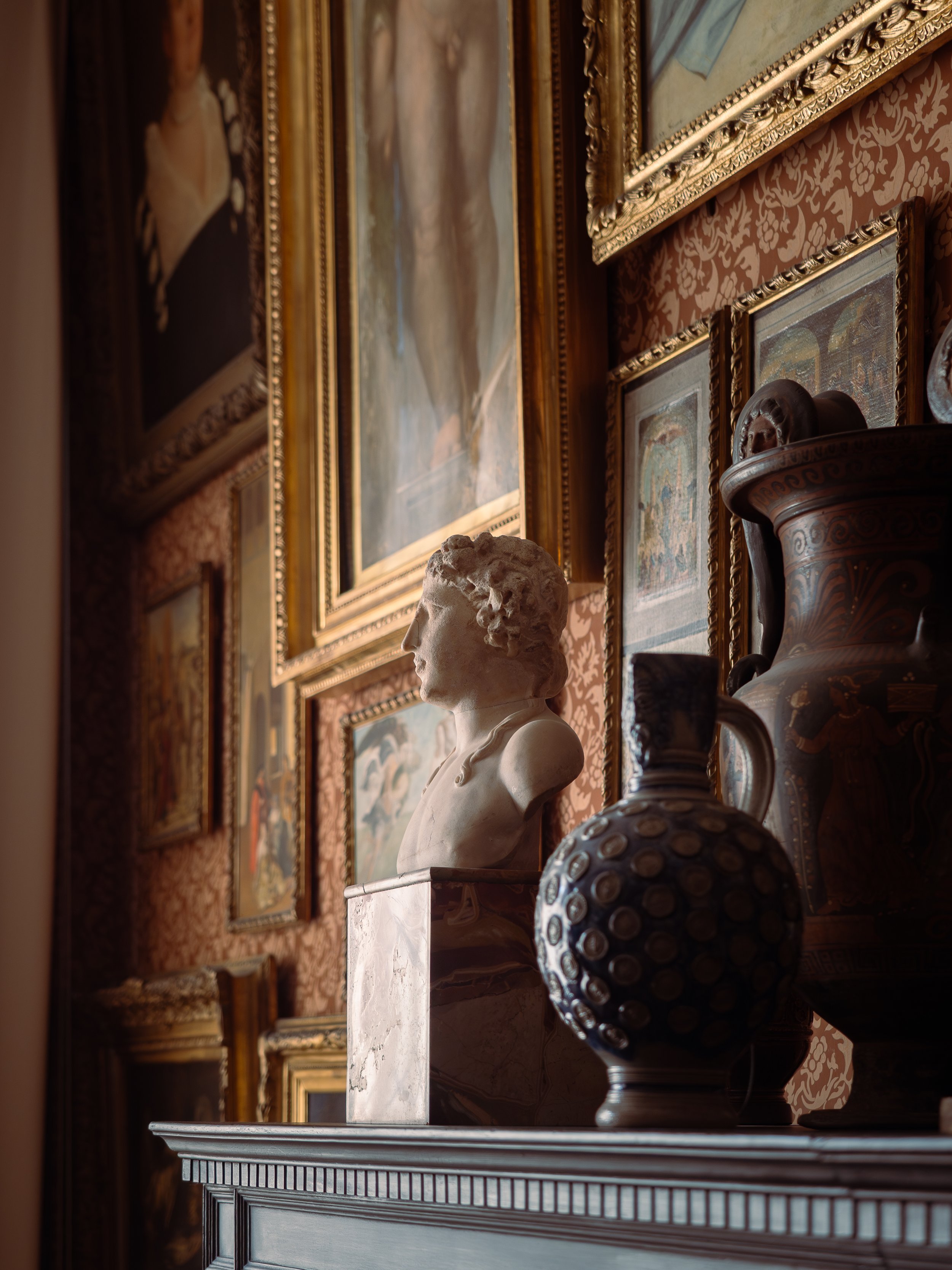
The first floor is where the family actually lived, and the atmosphere is an extreme contrast to the airy studios above. These rooms are dark, cramped, and finished in a heavy, mid-nineteenth-century style. The walls are a deep red and are covered in portraits of his mother and his partner, Alexandrine Dureux.
It feels incredibly personal and there is no flow or modern museum logic here; it is a series of small rooms packed with furniture, personal trinkets, and dozens of small, framed sketches. It is the domestic side of Symbolism; private, melancholic, and a bit suffocating.
The Upper Studios
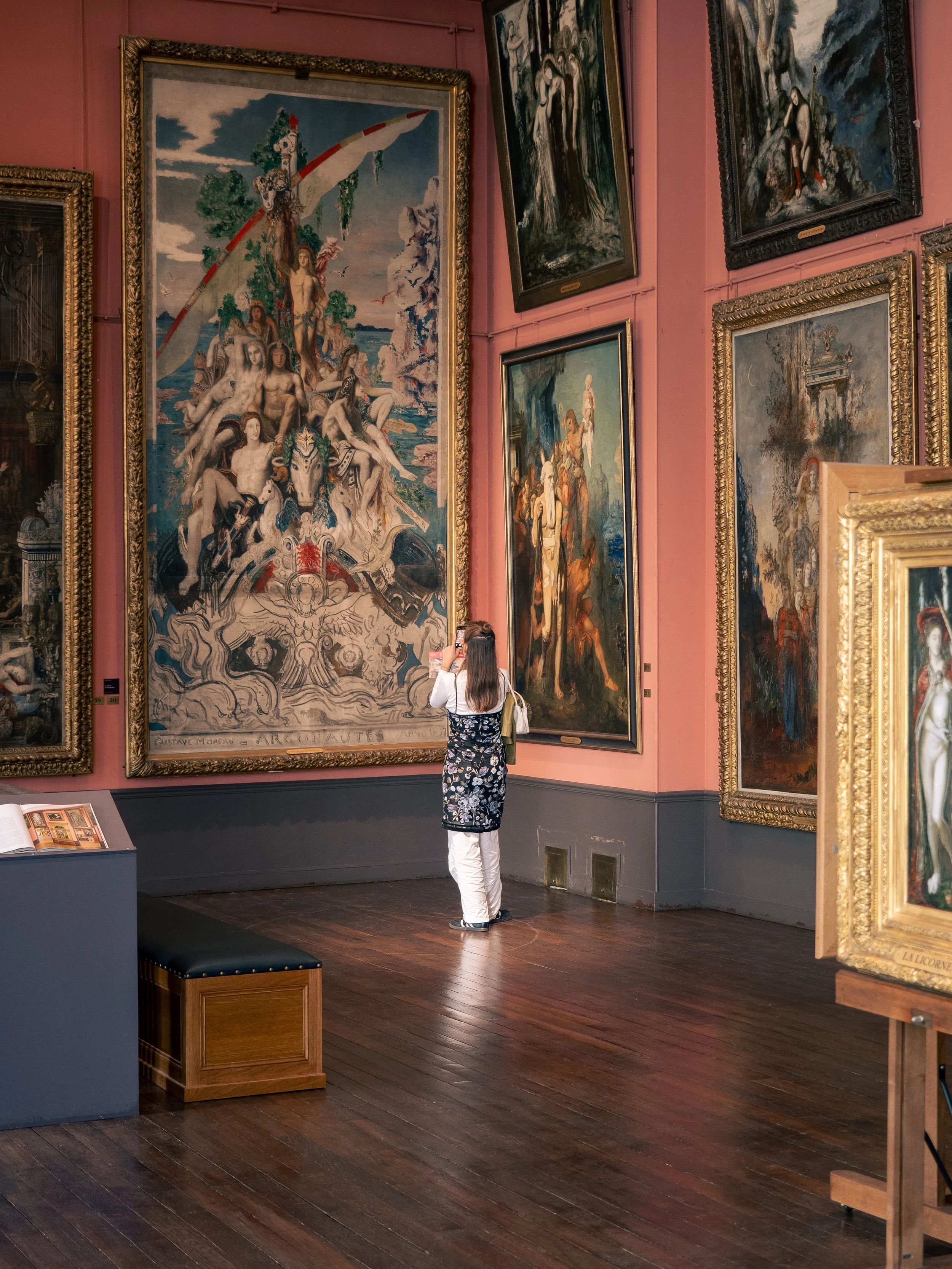
When you move up to the second and third floors, the scale of the house changes completely. Moreau had the original small rooms knocked through to create two massive, double-height workshops. The walls are covered with canvases, leaving almost no bare wall visible.
The first thing you notice is the texture of the work. If you get close to the larger paintings, you can see that he didn't just brush on the paint. He used a technique of scratching into the surface and layering the pigment so thickly that it looks more like relief carving than a flat painting. The subjects are mostly taken from the bible or Greek mythology. You will see The Daughters of Thespius, which is an enormous canvas featuring fifty different women, and his various versions of Salome. A lot of these works were left unfinished when he died, so you can see his charcoal outlines and the way he blocked in the light before he ever started with the oils.
Musee Gustave Moreau - Michael Adair
The Spiral Staircase
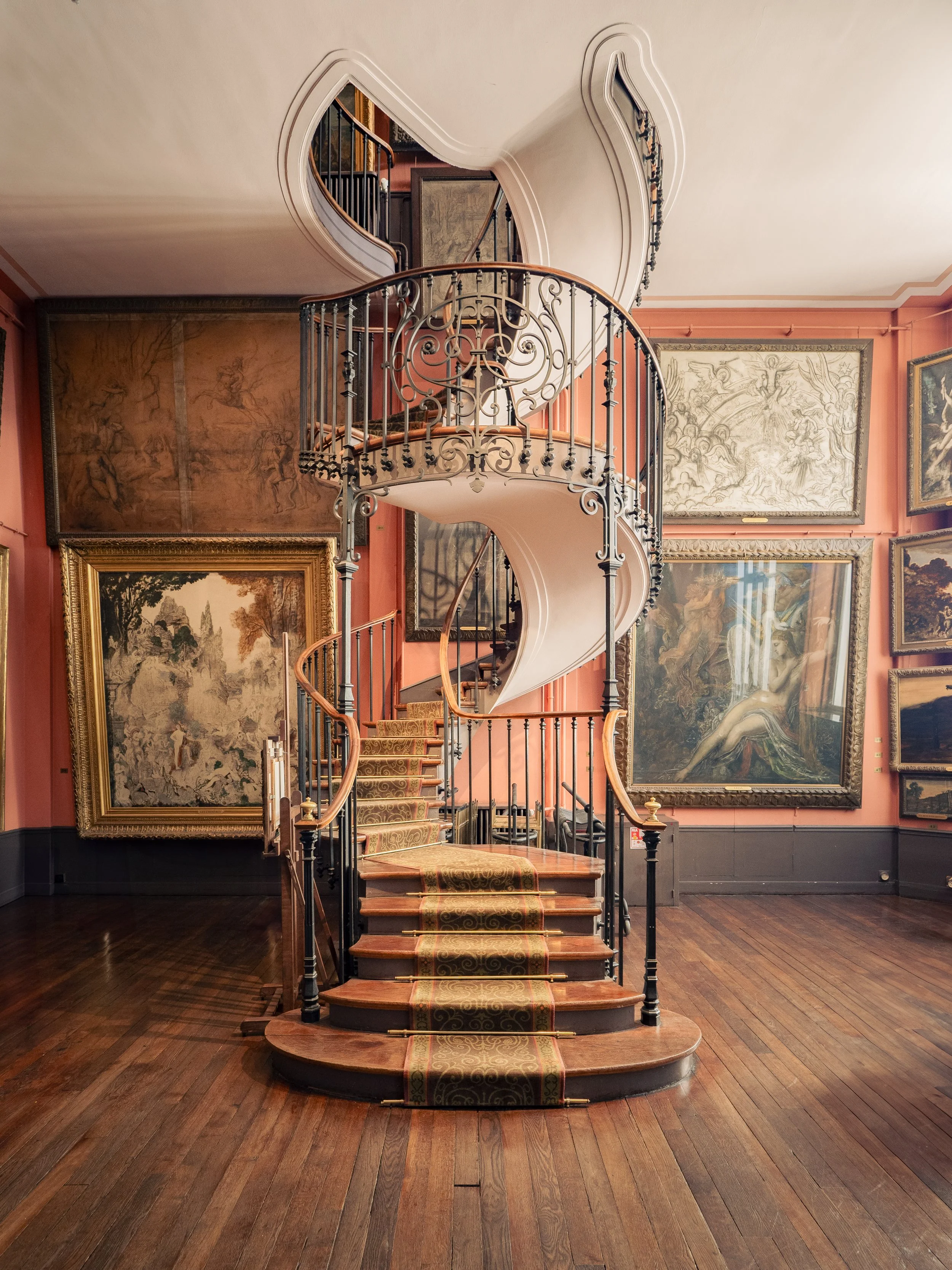
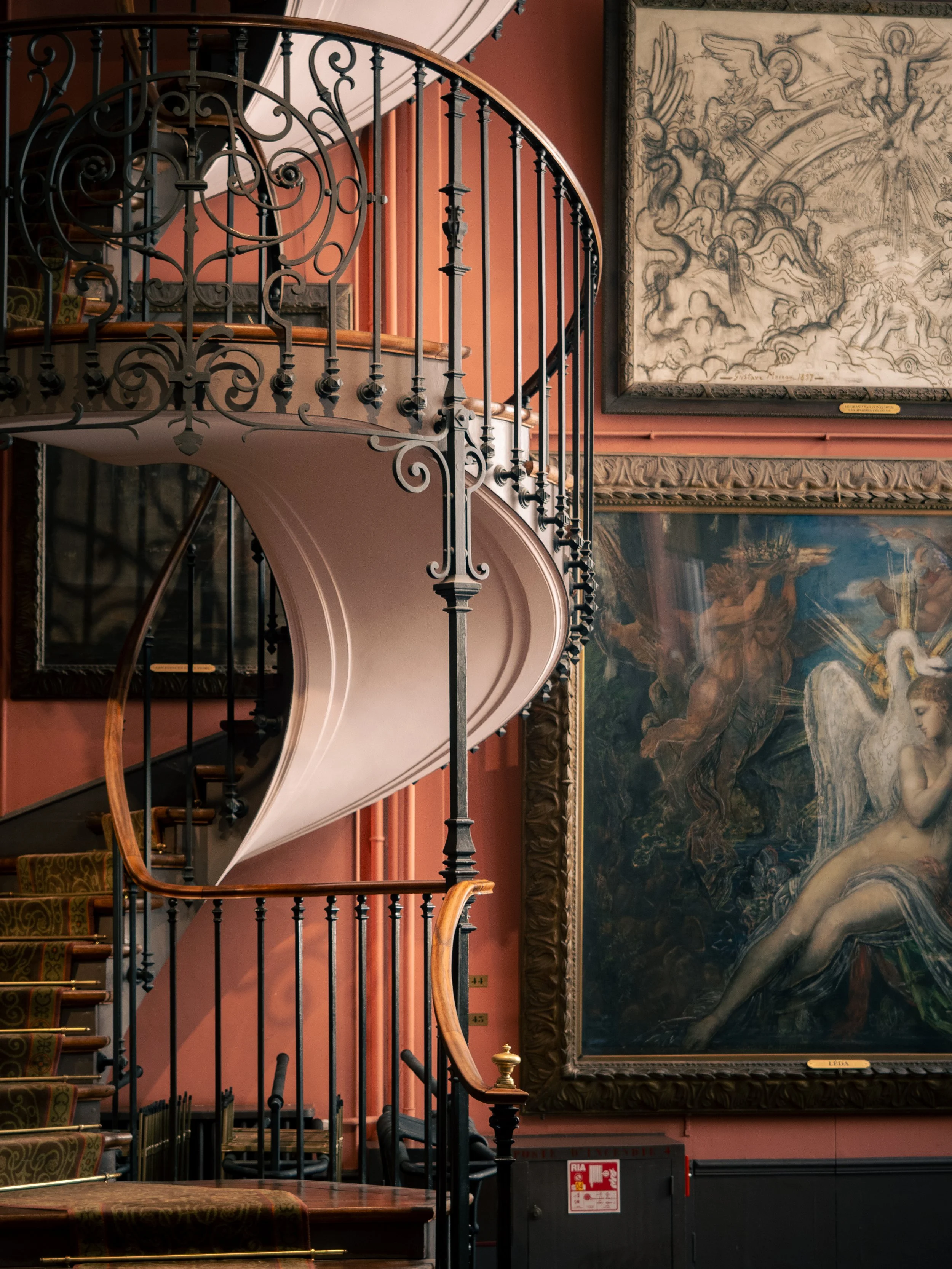
The reason everyone comes here is the staircase. It was designed by Albert Lafon in 1895, and it’s a masterclass in solving an architectural problem with style. Moreau needed to connect the two floors of his studio, but he didn't want to lose a single inch of wall space for his paintings. The solution was this massive, twin-flight spiral that seems to hang in the air at the back of the room.
Technically, it’s a bit of a marvel. It’s entirely self-supporting as there is no central pillar holding it up. Instead, it relies on the strength of the outer iron stringers and the way the landings are anchored into the walls. It gives the whole thing a skeletal, weightless look that shouldn't work for something made of heavy cast iron.
If you look at it from underneath, you can see the detail in the scrollwork. It’s painted a dull, dark grey-green that stands out against the deep red of the walls. It’s functional, obviously, but it’s also the only way to get high enough to actually see the top rows of the canvases on the third floor.
For a house built in the 1850s, dropping a massive iron coil like this into the middle of it was a huge structural risk, but it’s the only thing in the house that feels as modern as Moreau’s paintings.
Musee Gustave Moreau - Michael Adair
The Pivoting Cabinets
Along the walls, tucked under the larger paintings, are rows of wooden cabinets. These are actually pivoting display panels that Moreau designed himself. Because he had over 4,000 drawings and watercolours that wouldn't fit on the walls, he put them into these heavy frames that you can pull out like the pages of a giant book.
It is a very tactile part of the museum. You have to physically move the panels to see the work. Inside, you find his anatomical studies, sketches of hands, and the small watercolour "blueprints" for the massive oils hanging above you. There is a specific smell of old wood and paper in this corner of the room, and the sound of the frames clicking back into place is the only thing you hear in the studio.
Practical Information
The Walk: It is a bit of a climb from the Saint-Georges or Trinité metro stations. Once you are inside, there is no lift, and the stairs are steep and narrow. If you have mobility issues, this is a difficult building to navigate.
The Light: The upper studios have enormous windows. If you go on a bright day, the light is perfect for photography, but the heat can become quite intense under the glass. Conversely, on a grey Paris afternoon, the deep red walls of the lower floors can feel very dark, so bring a camera that handles low light well.
Tickets: The museum is located at 14 Rue de la Rochefoucauld. You can buy tickets at the door, but it is a small space and it can get crowded with art students. It’s best to arrive right at 10:00 AM if you want to see the studios before the crowds arrive.