Palazzo Grimani: The original man cave.
Palazzo Grimani - Michael Adair
Palazzo Grimani - Michael Adair
The Original Man Cave
If you are tired of fighting the elbows at Saint Mark's Basilica, walk ten minutes north to the Palazzo Grimani. From the outside, it looks like just another crumbling Venetian palace. Inside, it hides the most spectacular private showroom of the Renaissance.
This was the home of Giovanni Grimani, a wealthy Patriarch who really, really wanted to be Pope. He never got the top job because he was accused of heresy, which was a significant career roadblock in the sixteenth century. Since the Vatican rejected him, he decided to soothe his ego by building a house that was arguably better than the Vatican.
He turned his residence into a museum for his massive collection of Greek and Roman antiques, essentially creating the ultimate trophy room to show the Church exactly what they were missing
The Tribuna
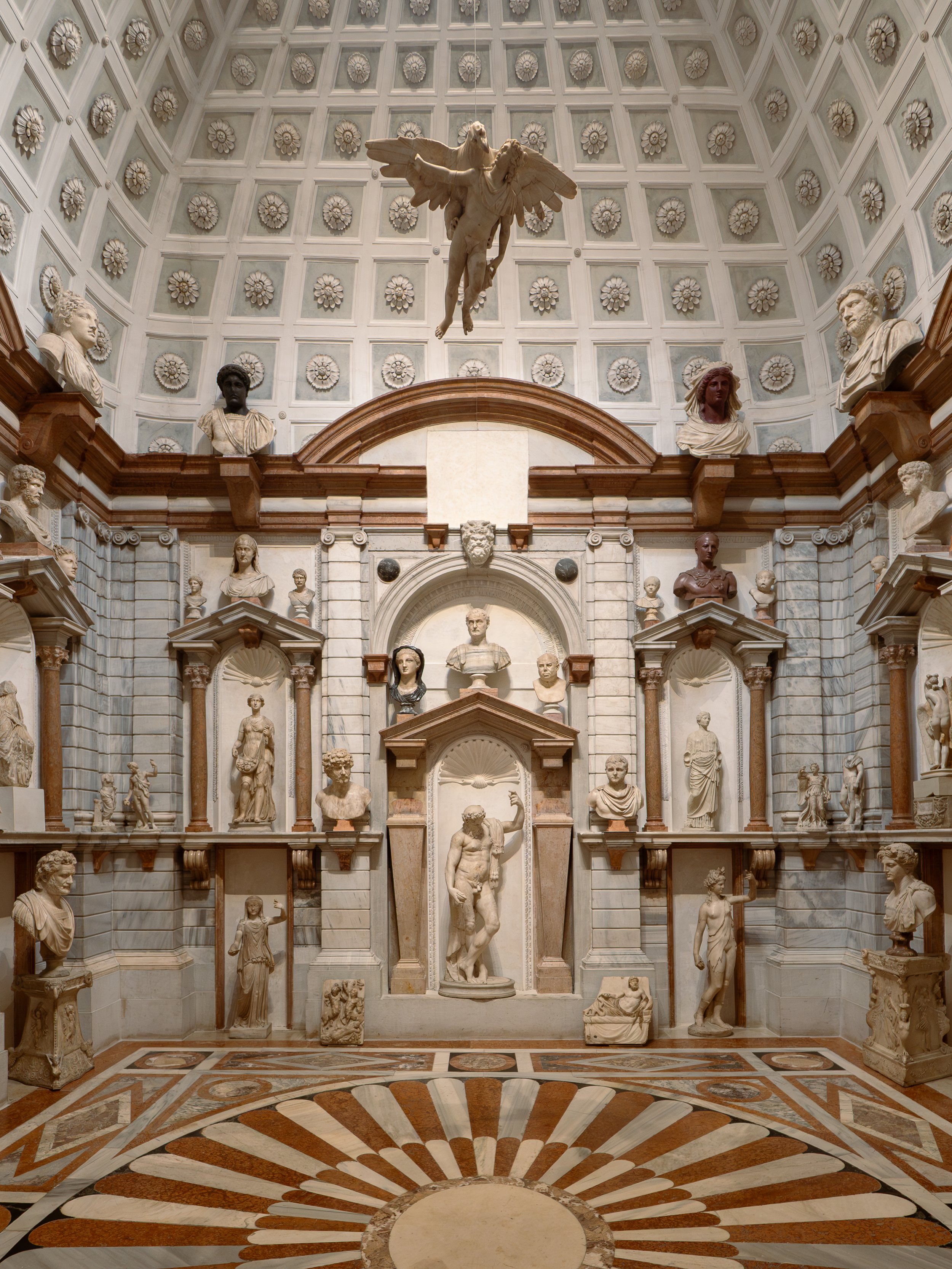
The highlight of the tour is the Tribuna. It is arguably the most beautiful room in Venice if not in Europe. Giovanni designed this space specifically to make his guests feel small. It is not a soaring cathedral but a concentrated box of power that looks like a miniature Pantheon dropped into a Venetian house.
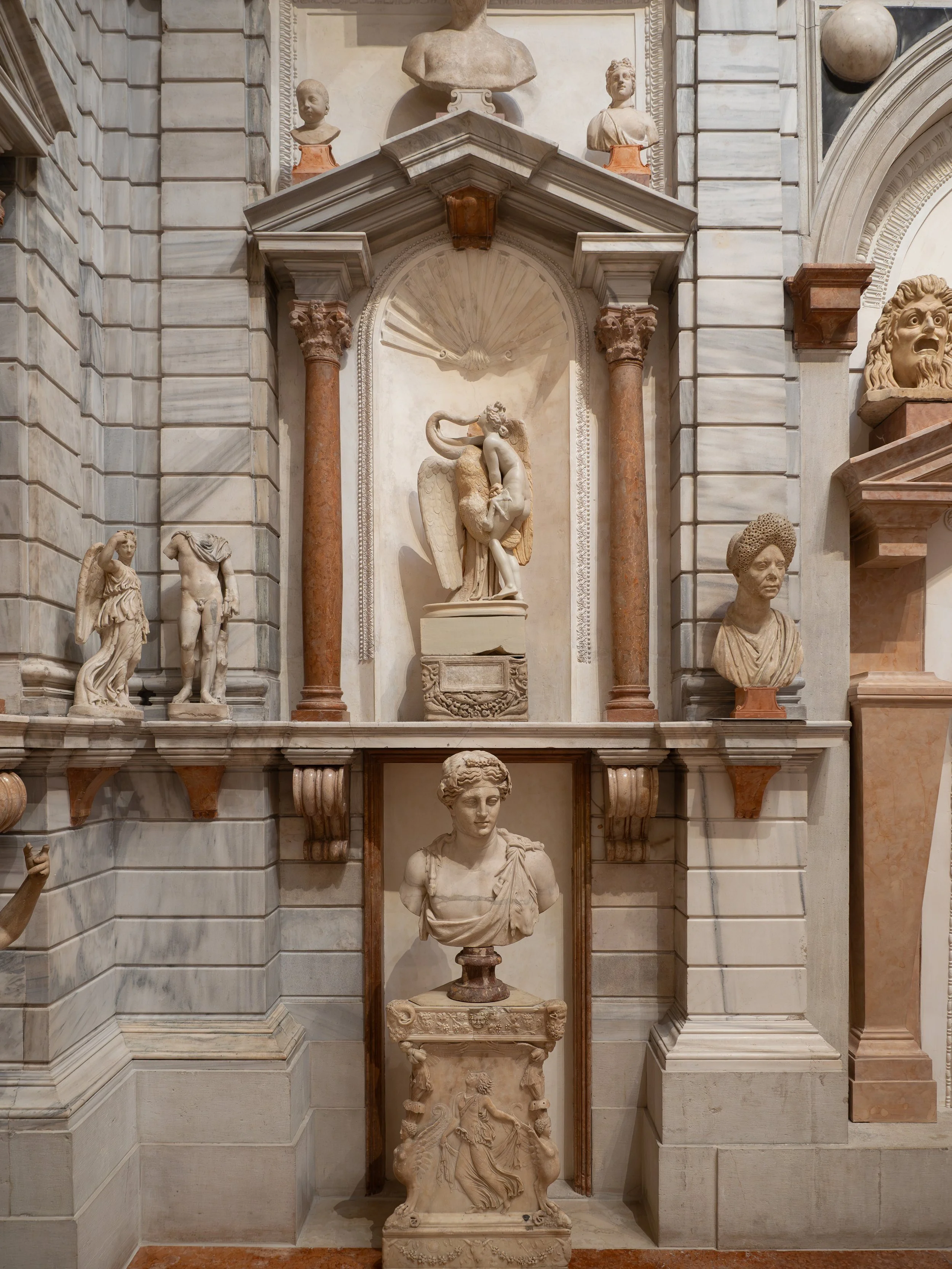
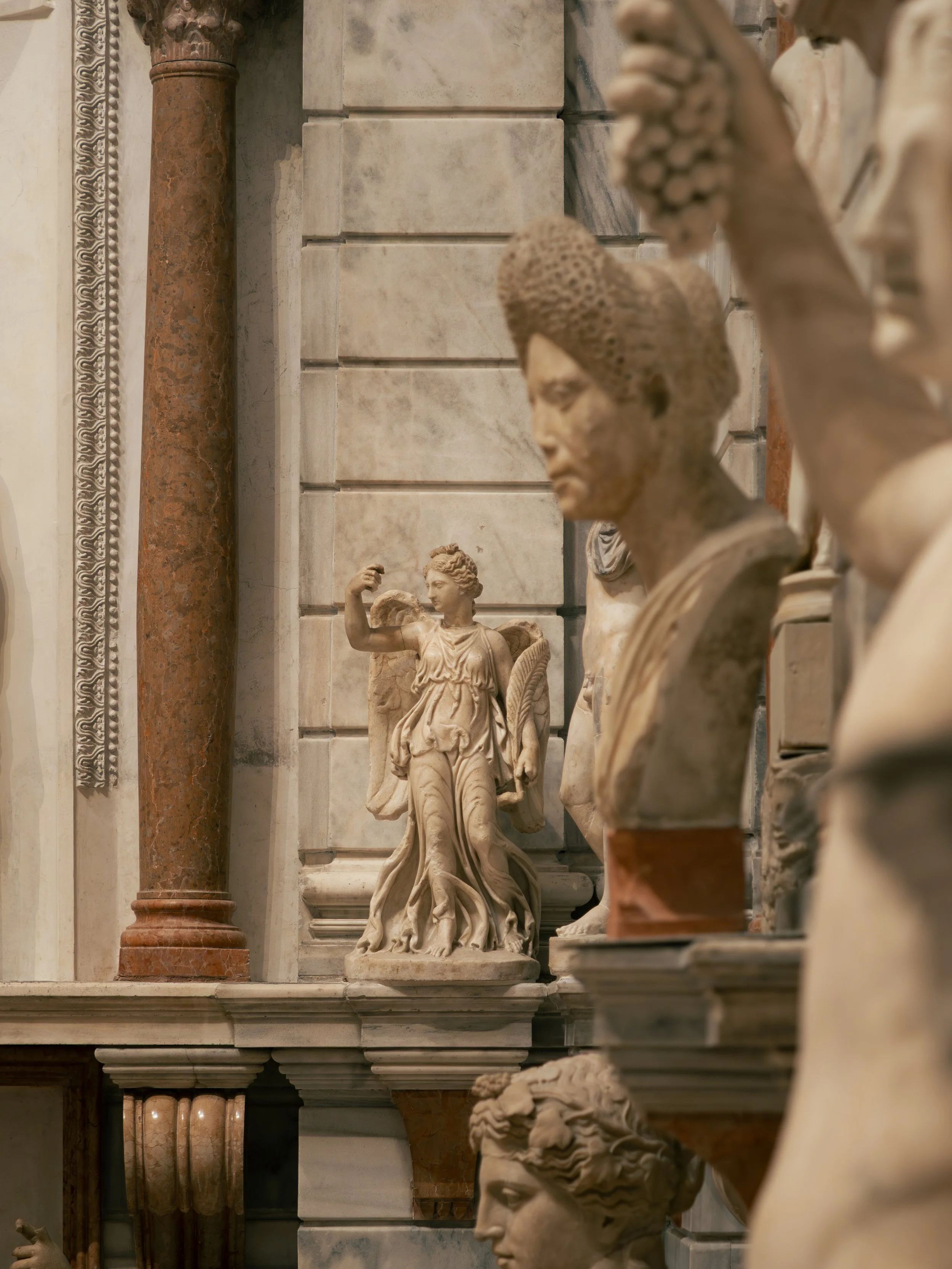
The walls are full of famous statues. You will see a marble Dionysus leaning on a Satyr because he is drunk. There is also a statue of Leda and the Swan and a Greek Peplophoros. These are not just decorations. Giovanni picked them to show off. He put Roman emperors next to gods to hint that his family was just as important.
The lighting here is not electric; it is engineered. The room is capped by a high lantern that acts as a natural spotlight. The sun moves across the sky and changes the mood of the room throughout the day.
In the morning, the white marble glows softly. At noon, the harsh light creates deep, dramatic shadows in the niches. It is a masterful use of natural special effects that makes modern gallery lighting look boring by comparison.
Palazzo Grimani - Michael Adair
The Great Vanishing Act
You might have heard that the statues in this room are copies. For a very long time, you would have been absolutely right. In 1594, immediately after Giovanni died, the movers arrived. Per his donation to the state, the entire collection was stripped from the walls and transferred to the Marciana Library to become the public Archaeological Museum.
For over four hundred years, the niches you see today stood empty or held cheap plaster casts that gathered dust. But that changed recently.
In May 2019, a historic agreement allowed the collection to return home. The originals were taken out of the museum and placed back into the exact niches Giovanni designed for them.
This means you are no longer looking at replicas. You are standing in the room exactly as it existed in the sixteenth century, witnessing a specific vision that was lost for centuries.
Most museums just line up ancient statues against a blank white wall. Here you get to see them arranged in a living space exactly where they belong.
It turns the room from an empty shell back into a completed puzzle. You can finally understand the full story Giovanni was trying to tell his guests.
Palazzo Grimani - Michael Adair
The Floating Boy
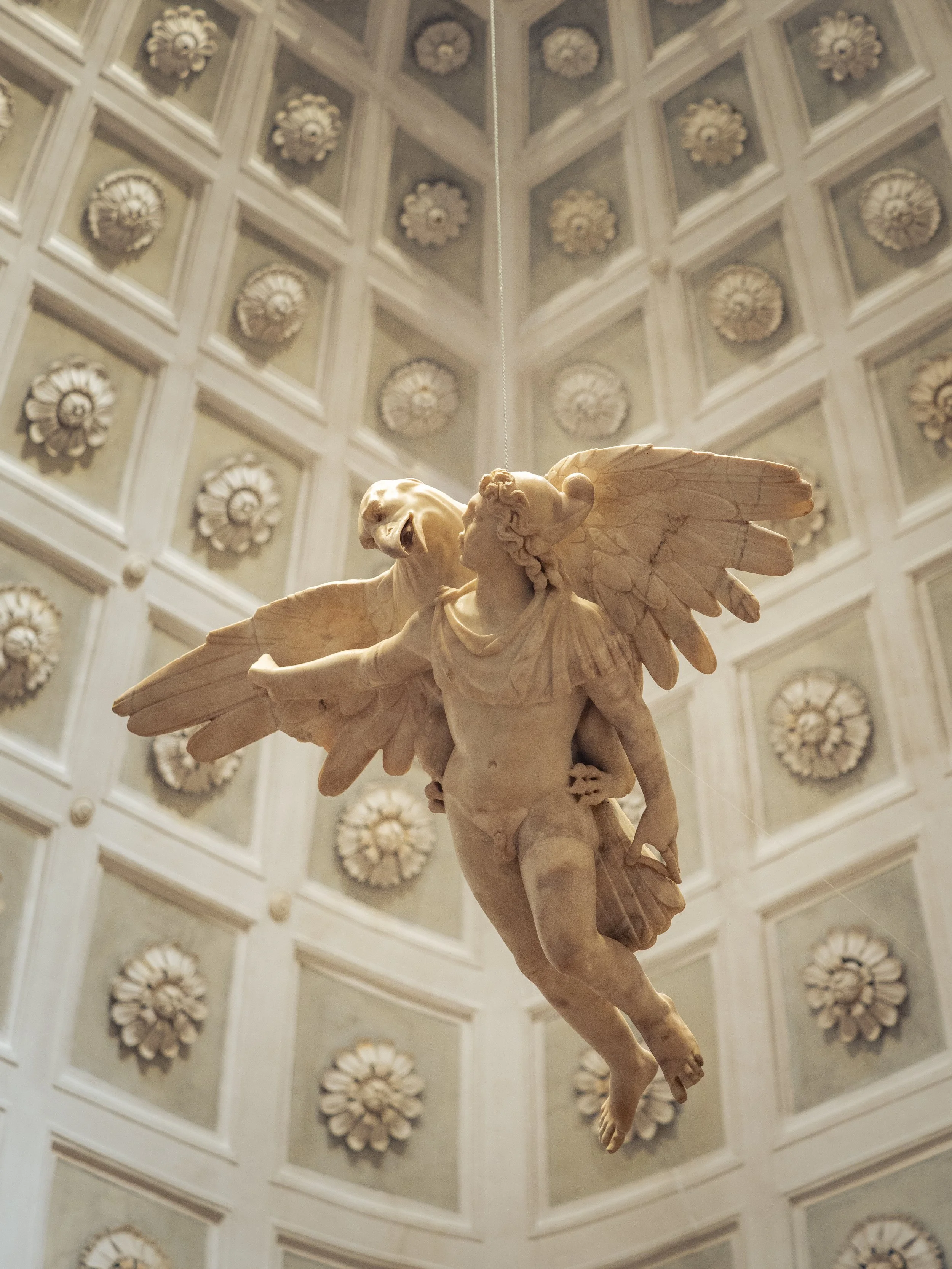
The absolute star of the show hangs in the center of the room. Suspended in the air, framed perfectly by the architecture, is the Abduction of Ganymede.
It is a Roman statue depicting the mythological Trojan prince being snatched up by Zeus in the form of an eagle. Most museums would bolt a statue like this to the floor. Grimani had a flair for the dramatic. He hung it from the ceiling so the figure appears to be flying upwards toward the light.
It forces you to crane your neck and look up, which is exactly what Giovanni wanted. The entire room is designed to draw your eye toward the heavens, reminding you that the Grimanis were not just rich; they were divine
Practical Information
Location:The Palazzo Grimani is located at Ruga Giuffa 4858 in the Castello district. It is difficult to find by accident, so use a map app.
Opening Hours: The museum is generally open from Tuesday to Sunday. The doors open at 10:00 AM and close at 7:00 PM. The last admission is permitted at 6:30 PM.
Tickets: You can buy tickets at the door, but it is smarter to book online to guarantee entry. The ticket often includes access to the nearby Ca' d'Oro gallery as well.