Palazzo Reale: How to make an entrance in Naples.
Palazzo Reale di Napoli - Michael Adair
Palazzo Reale di Napoli - Michael Adair
Palazzo Reale di Napoli Website | Map
Naples is a city of noise, chaos, and intense energy. But stepping into the Palazzo Reale from the Piazza del Plebiscito offers a silence that is almost startling.
While the palace is full of apartments, a theatre, and a throne room, there is one feature that eclipses them all. It isn't a room; it is a way to get to a room.
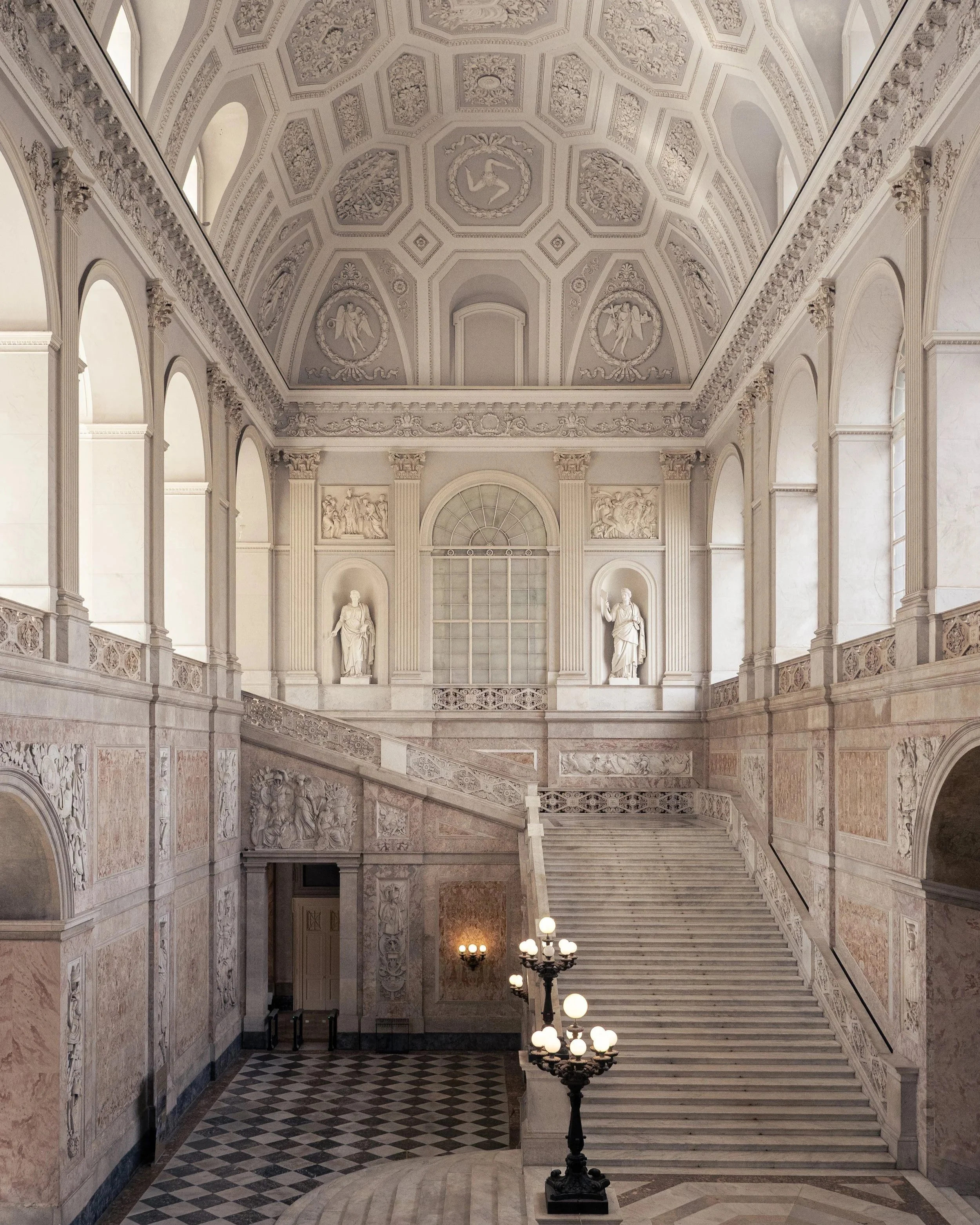
The Scalone d'Onore (Grand Staircase) is widely considered one of the finest monumental staircases in Europe. It is a structure so audacious, so pink, and so huge that it makes you wonder if the architect was being paid by the ton of marble.
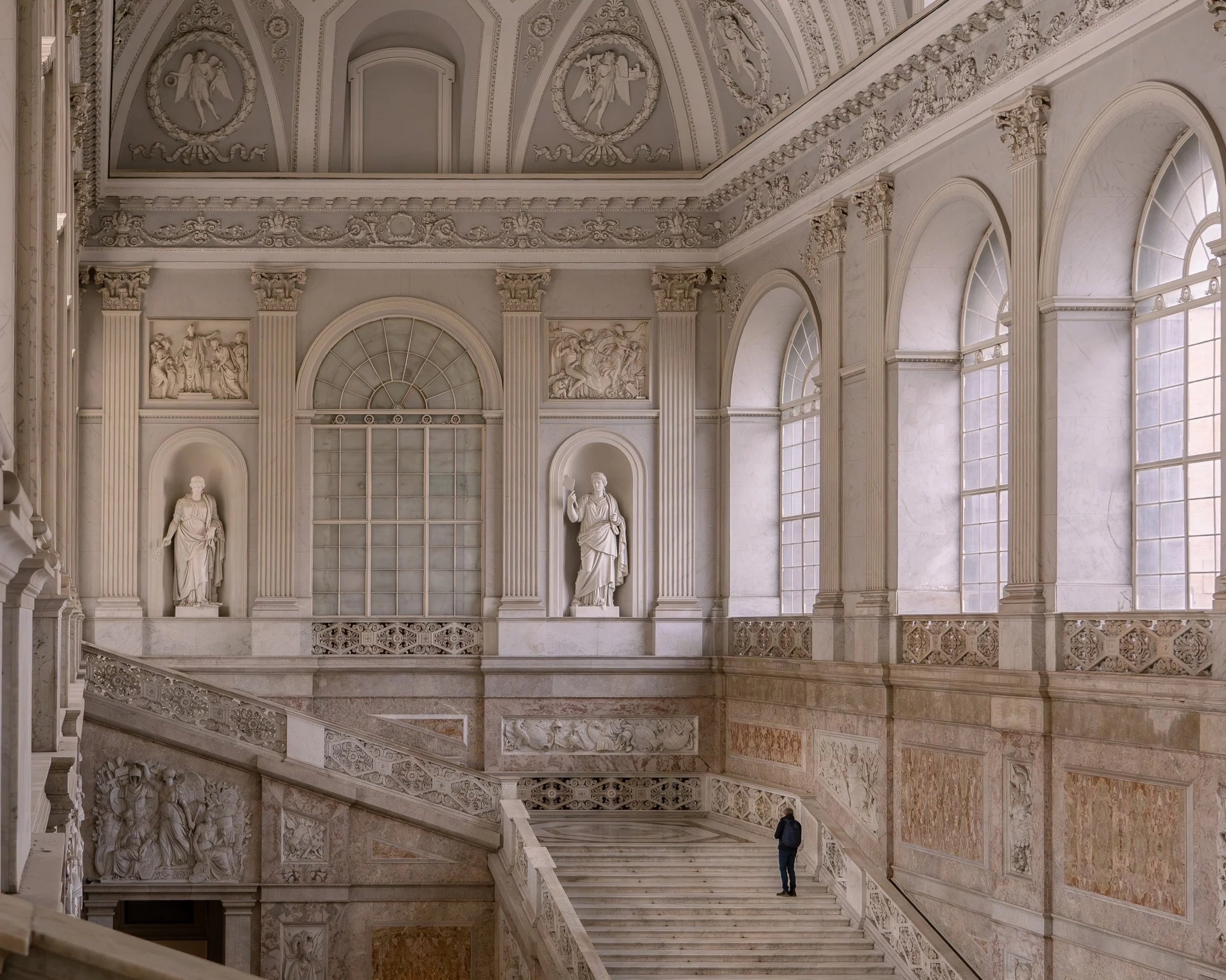
Spanning a massive 750 square meters (8,070 square feet), which is nearly the footprint of two NBA basketball courts, it sits within a hall that rises 30 meters (98 feet). That is a vertical drop equivalent to a ten story building.
Yet, in a photograph, this immense scale vanishes. The classical proportions are so perfect that scaling up every arch, balustrade, and column tricks the eye into seeing a regular sized staircase. Without a person standing there to break the illusion, it is impossible to tell its true size. This is why I was so kind and left a person in the picture for you all to see!
It is a piece of architecture designed with a single psychological purpose: to make the King feel like a god, and to make everyone else feel very, very small.
Palazzo Reale di Napoli - Michael Adair
The Montesquieu Insult
The staircase you see today is actually a clapback to a historical insult.
When the French philosopher Montesquieu visited Naples in 1729, he toured the original palace. He admired the location and the size, but he famously remarked that the building was like a "house without a staircase." At the time, the access to the royal apartments was a modest, functional affair by the architect Domenico Fontana, hidden away in a corner.
The Bourbon Kings of Naples stewed on this critique for a century. Finally, after a fire damaged the palace in 1837, King Ferdinand II decided it was time to fix the problem. He hired the architect Gaetano Genovese and basically told him to build a staircase so grand that no Frenchman could ever insult him again.
Genovese delivered. The result was a masterpiece of stone and light that silenced the critics forever. It transformed the missing feature into the defining symbol of the monarchy. What began as a petty grievance over a missing staircase ultimately gave Naples one of its most enduring architectural treasures.
A Study in Pink and White
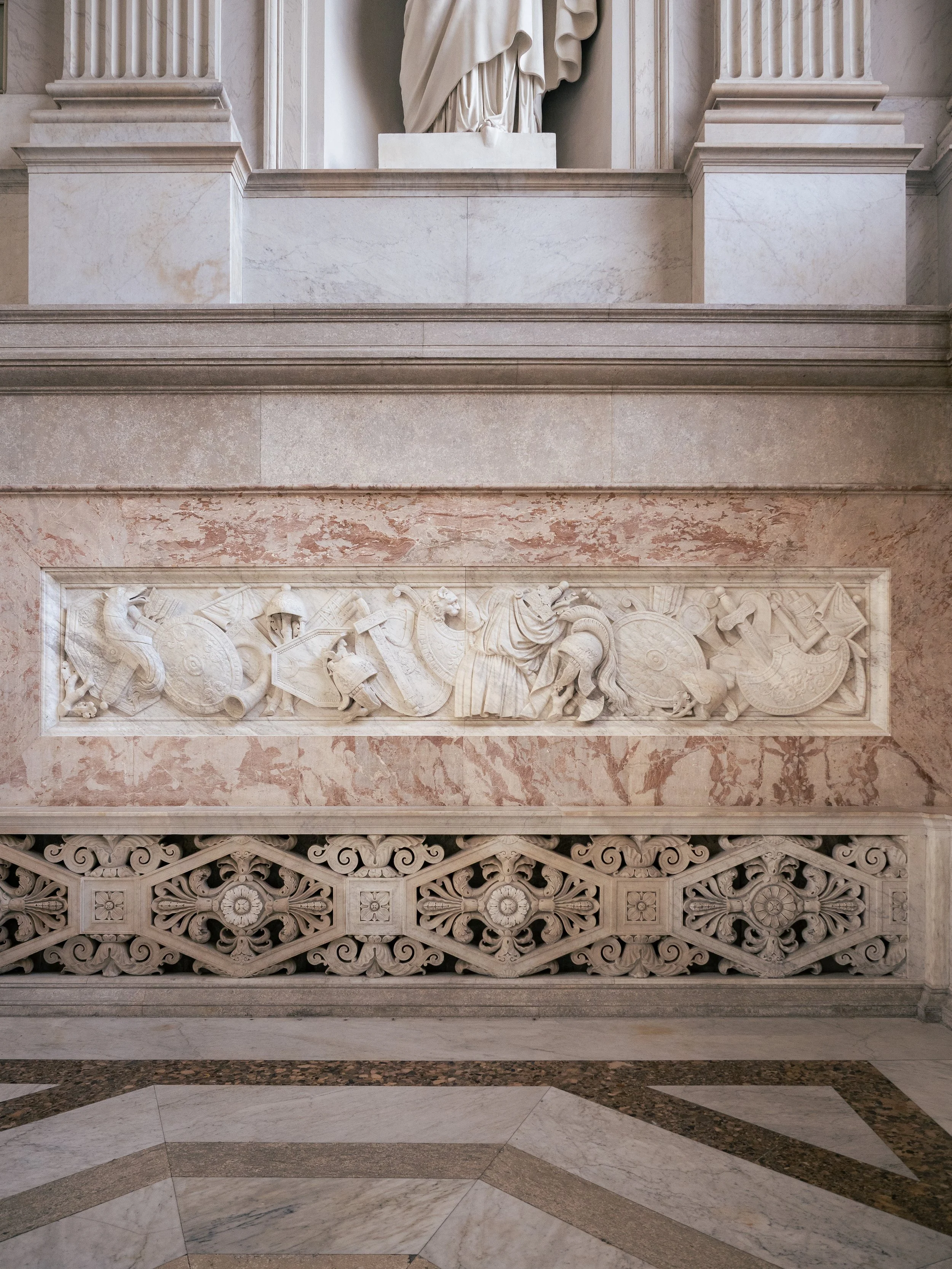
The first thing that hits you is the colour. This isn't the cold, white neoclassical marble of London or Berlin. This is Neapolitan passion in stone. The entire space glows with a rosy hue that changes softly depending on the angle of the sun. Is it pink, is it purple? I don’t know.
The white is classic Carrara, but the pink is a rare local stone called Breccia di Vitulano and Portasanta. The effect is warm, vibrant, and incredibly expensive looking. It feels less like a government building and more like the inside of a very elaborate jewelry box. Every surface reflects the light from the enormous windows to create an atmosphere of opulent grandeur.
The staircase rises in a single, massive central flight before splitting into two symmetric arms that return upwards. It is the classic "Imperial" style, but scaled up to ridiculous proportions. Heavy marble balustrades guide you upward, adorned with intricate carvings and statues as you ascend toward the royal apartments.
Palazzo Reale di Napoli - Michael Adair
The Giants at the Top
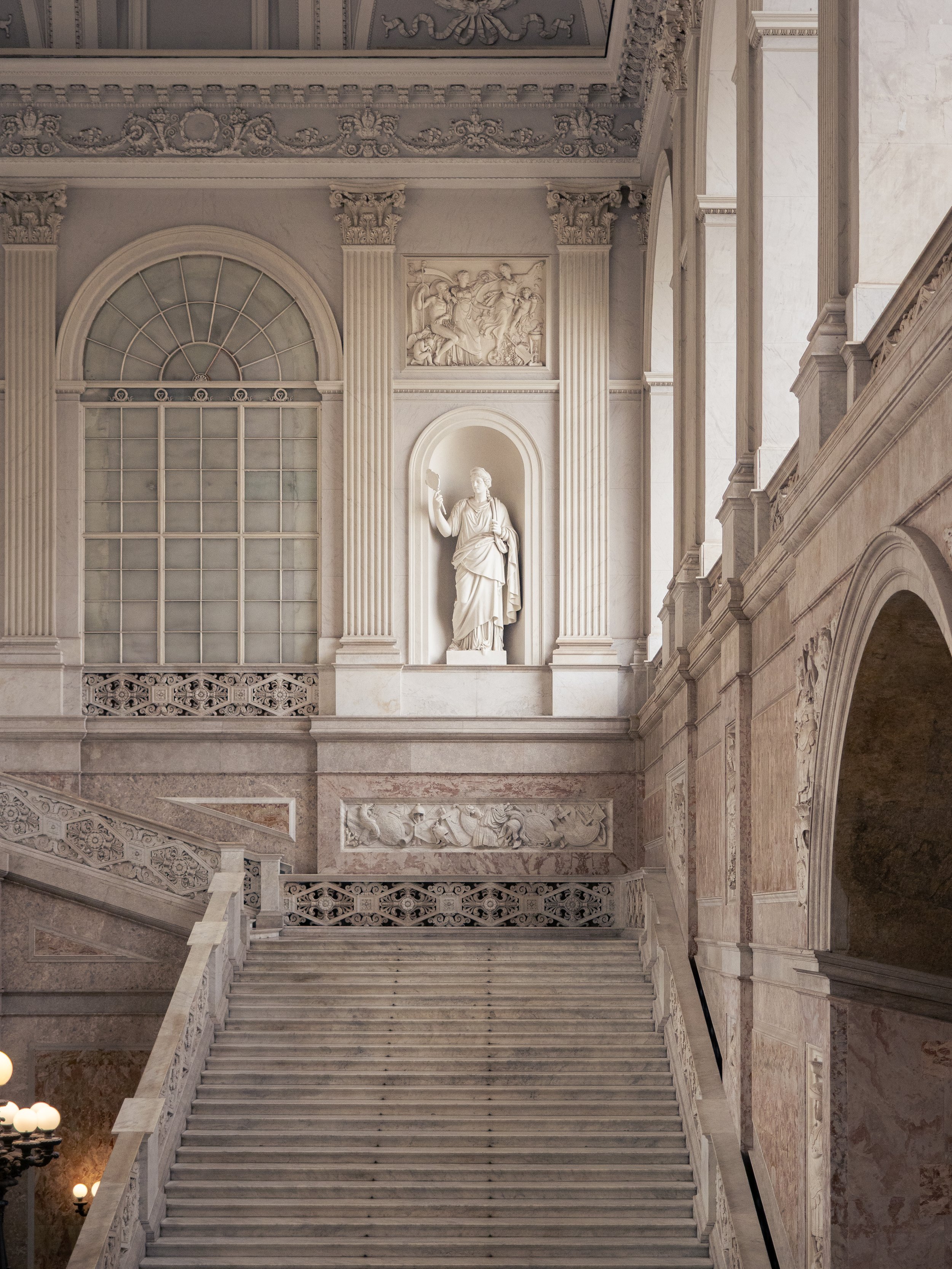
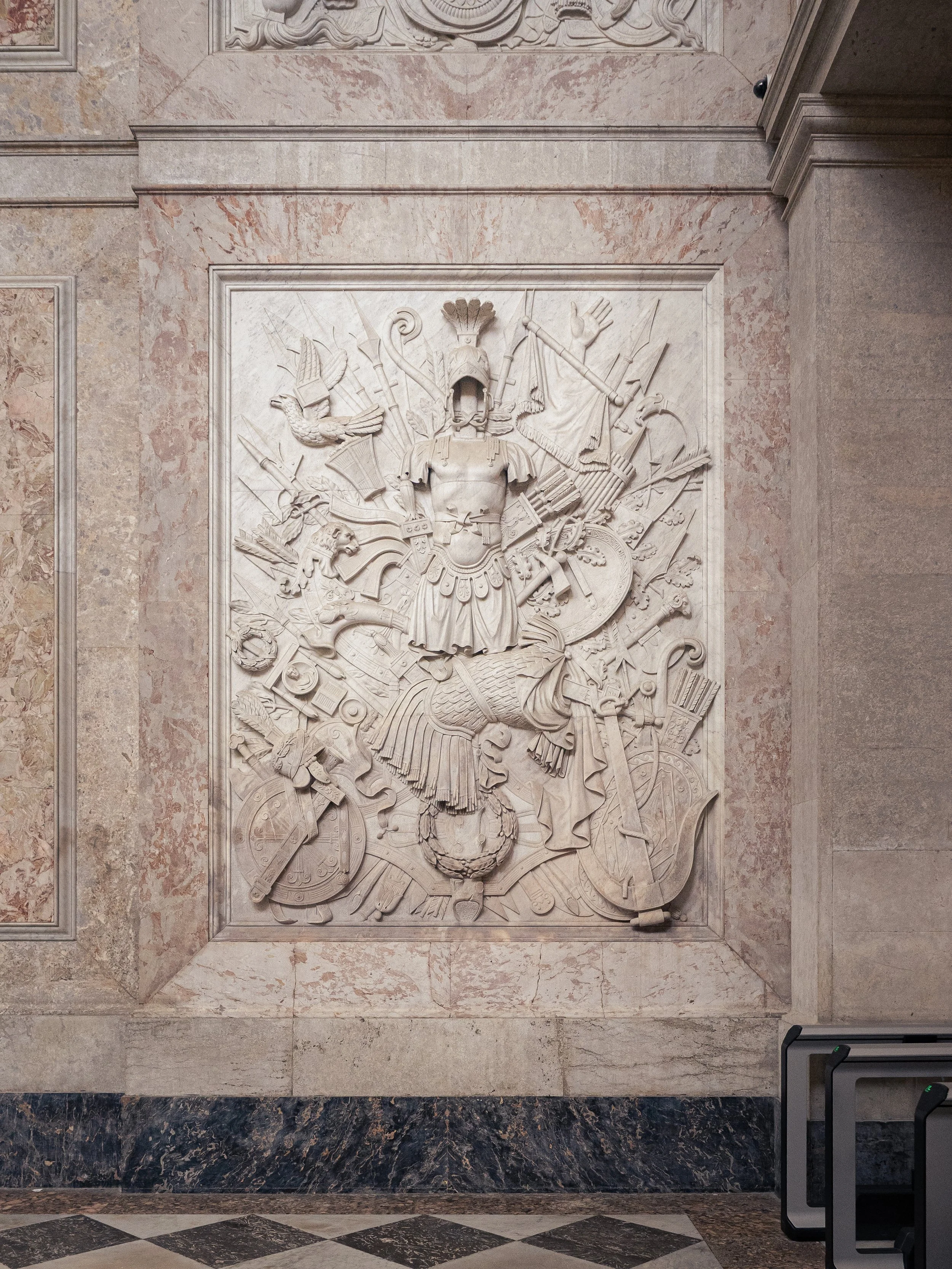
As you go up the stairs, you are watched. At the top of the stairs, flanking the entrance to the Ambulatory, stand four colossal statues representing Strength, Justice, Clemency, and Prudence. They are oversized and imposing, standing over 3 meters (10 feet) tall.
These figures serve a calculated political function known as the Mirror of Princes. They assert that the King possesses the moral authority to rule. Strength represents military might while Justice establishes the King as the supreme judge. Prudence implies wisdom in governance and Clemency highlights the royal power to grant mercy.
Their sheer size serves a specific function as well, reminding every ambassador and courtier walking up these steps that the King had the power to reward or crush them.
The lighting adds to the drama. Genovese rejected the idea of a dark, enclosed stairwell. Instead, he opened the high walls with massive windows that capture the intense Mediterranean sun.
Palazzo Reale di Napoli - Michael Adair
The Practical Details
Tickets: You need a ticket for the Palazzo Reale to see the staircase, as it is inside the ticketed area.
The Route: The staircase is the very first thing you see after the ticket check. Do not rush up it. Take a moment at the bottom to appreciate the sheer weight of the stone above you.
The Court: After you climb the stairs, you enter the Ambulatory which looks down into the Courtyard of Honour. It gives you a great vantage point to see the original 17th century architecture of the palace before Genovese got his hands on it.
Naples is a city that often feels like it is falling apart, but the Grand Staircase is a reminder that when this city wanted to build for eternity, it knew exactly how to do it.