Spencer House: London’s most beautiful time capsule.
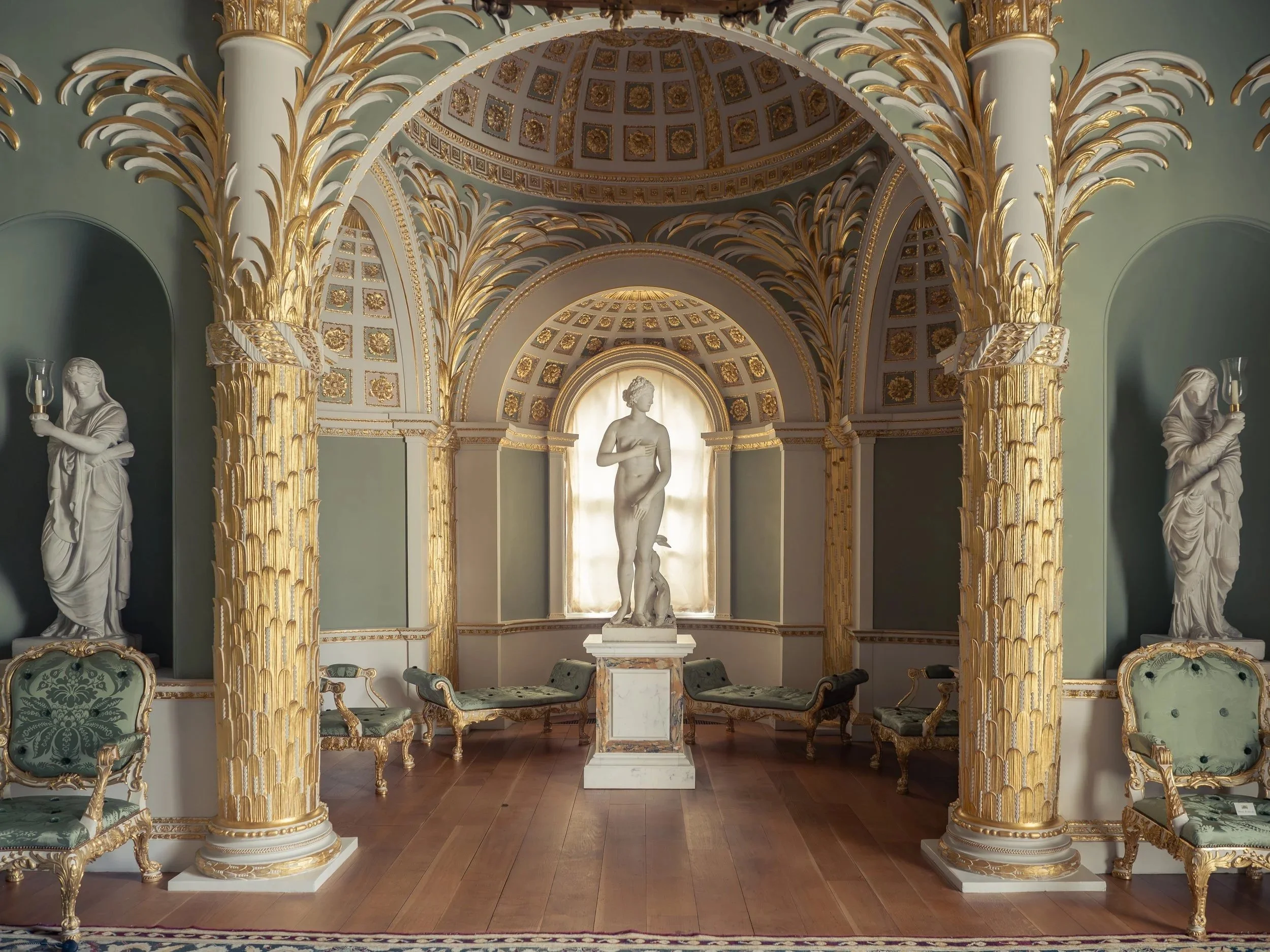
The Palm Room at Spencer House - Michael Adair Photographer
Spencer House Website | Map
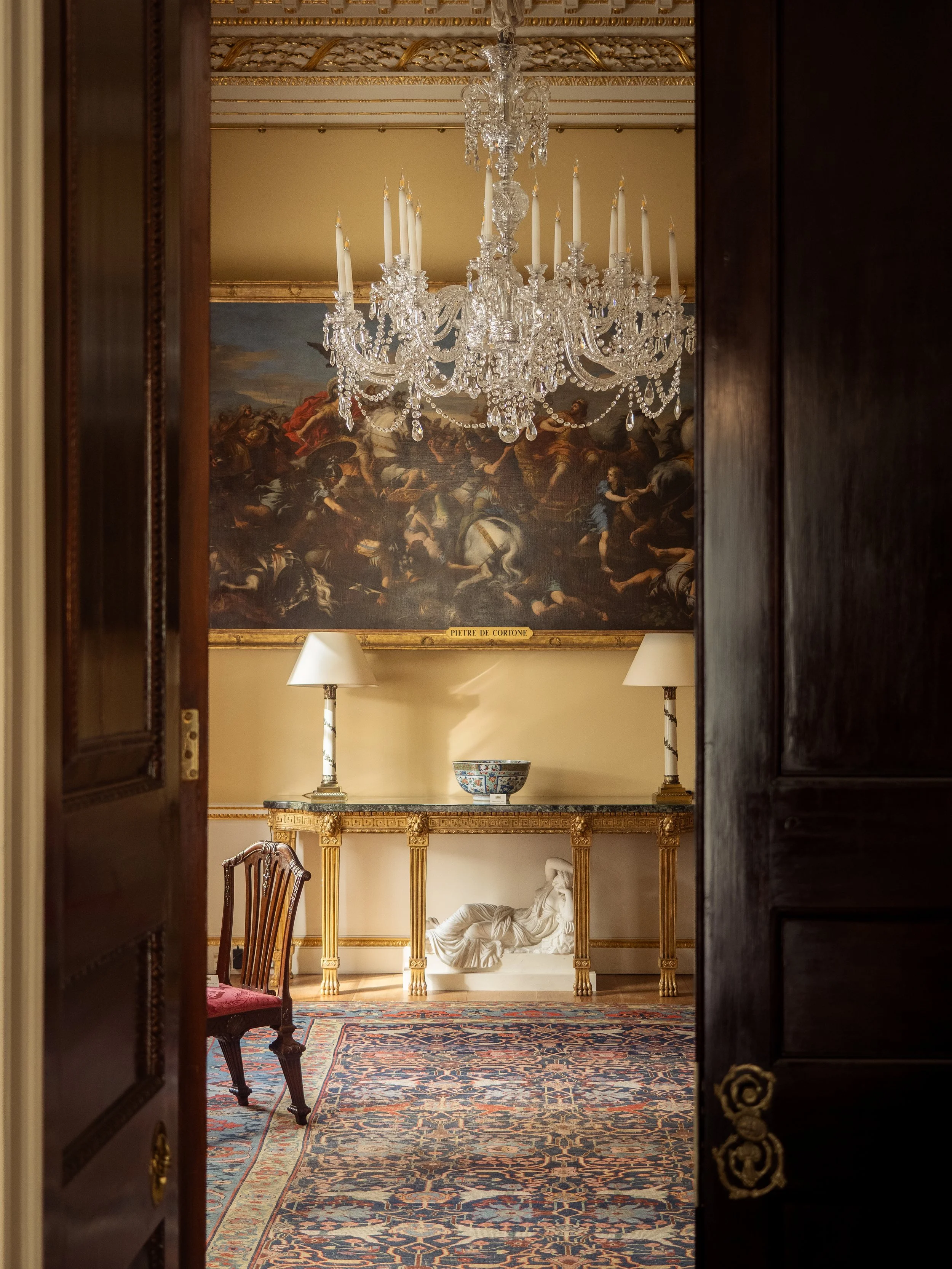
London is full of historic homes, but Spencer House sits in a category of its own.
Tucked away in the quiet streets of St. James’s, just a few minutes from The Ritz, lies the ancestral home of the Spencer family. Yes THAT Spencer family, the ancestors of Princess Diana. It was built between 1756 and 1766 for the first Earl Spencer, a man who seemingly had two goals in life: to marry his high school sweetheart, Georgiana Poyntz (they married in secret during a ball at Althorp, which was the scandal of the season), and to build a house so lavish that it made the neighbours look poor.
He succeeded at both.
The house itself is a masterclass in architectural one upmanship. It started under John Vardy, a student of William Kent, who designed the exterior and ground floor in a very proper, very British Palladian style. But halfway through the project, fashions changed. Vardy was swapped out for James "Athenian" Stuart, who had just returned from Greece and was obsessed with the newly discovered details of ancient architecture.
The result is a house that acts as a bridge between two eras. It starts with heavy, Baroque grandeur on the ground floor and ascends into light, elegant Neoclassicism on the first floor. Walking in here feels less like visiting a museum and more like you’ve been invited to a private party where the host has just stepped out for a moment. It is intimate, quiet, and overwhelmingly beautiful.
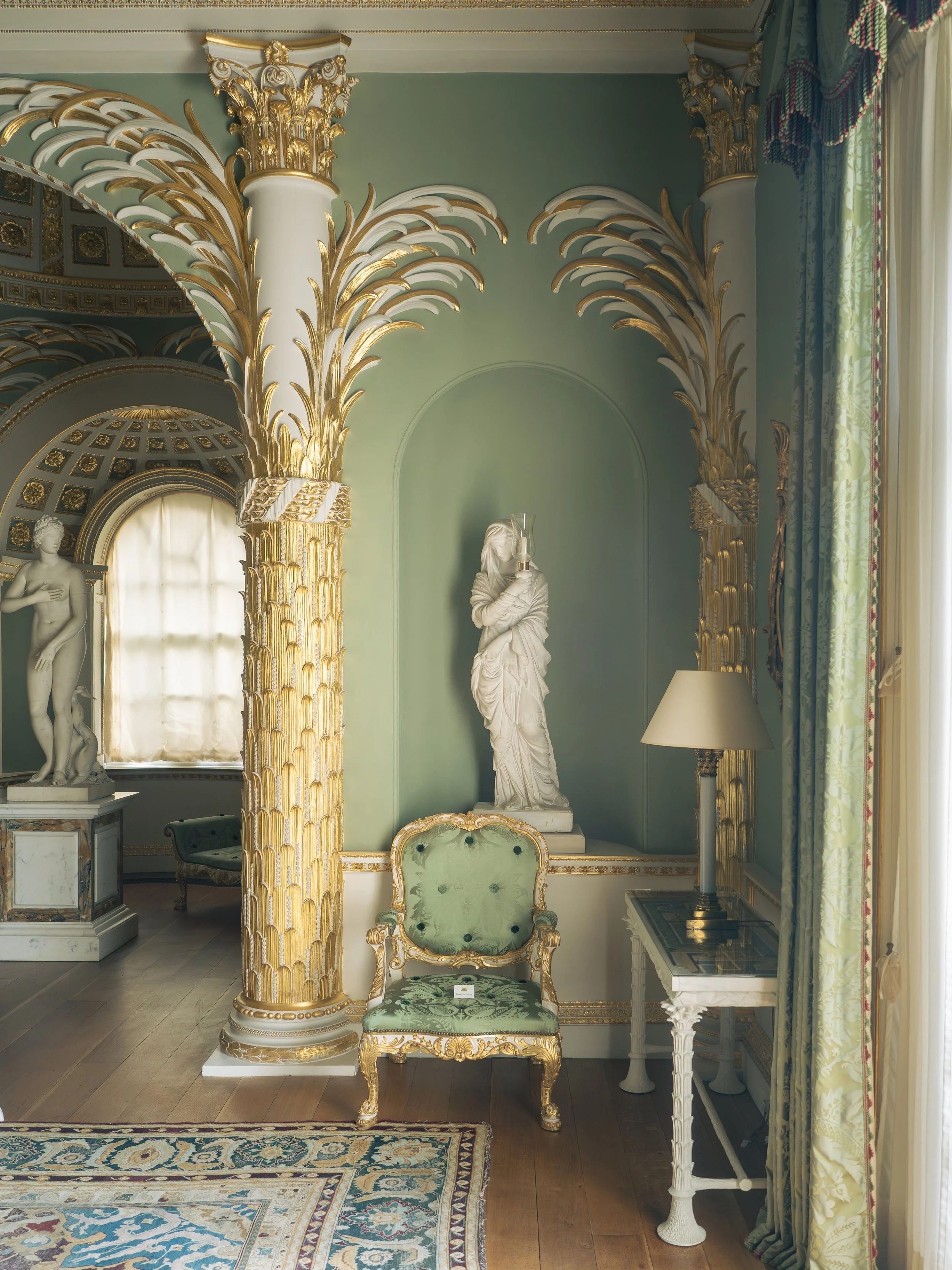
The Palm Room - Spencer House - Michael Adair
A Tropical Fantasy in London
The absolute showstopper of the house is the unusual Palm Room. This was John Vardy’s masterpiece before he was replaced, and he certainly went out with a bang. He made a bold, theatrical choice: instead of standard classical columns, he carved massive palm trees covered in gold leaf to line the walls.
The fronds climb up to the ceiling in a spectacular display of craftsmanship that feels more like a stage set than a drawing room. In the gray drizzle of 18th century London, this room must have felt like stepping into another world specifically, a fantasy version of a Greek temple where it’s always summer.
The walls are painted a spectacular, deep shade of green. During the 1980s restoration, experts scraped back layers of paint to find this original 18th century pigment, and it hasn't lost any of its impact. The room was designed as a space for the men to withdraw after dinner to discuss politics and pretend they were philosophers.
Vardy wasn’t just being whimsical; he was referencing the ancient Vitruvian theory that all stone columns originally evolved from tree trunks, though I doubt the originals were quite this gilded.
To complete the illusion, the palm fronds at the far end of the room stretch out to form a magnificent screen, perfectly framing the view of the actual trees in Green Park just outside. Because nothing says "democracy" like gold plated palm trees.
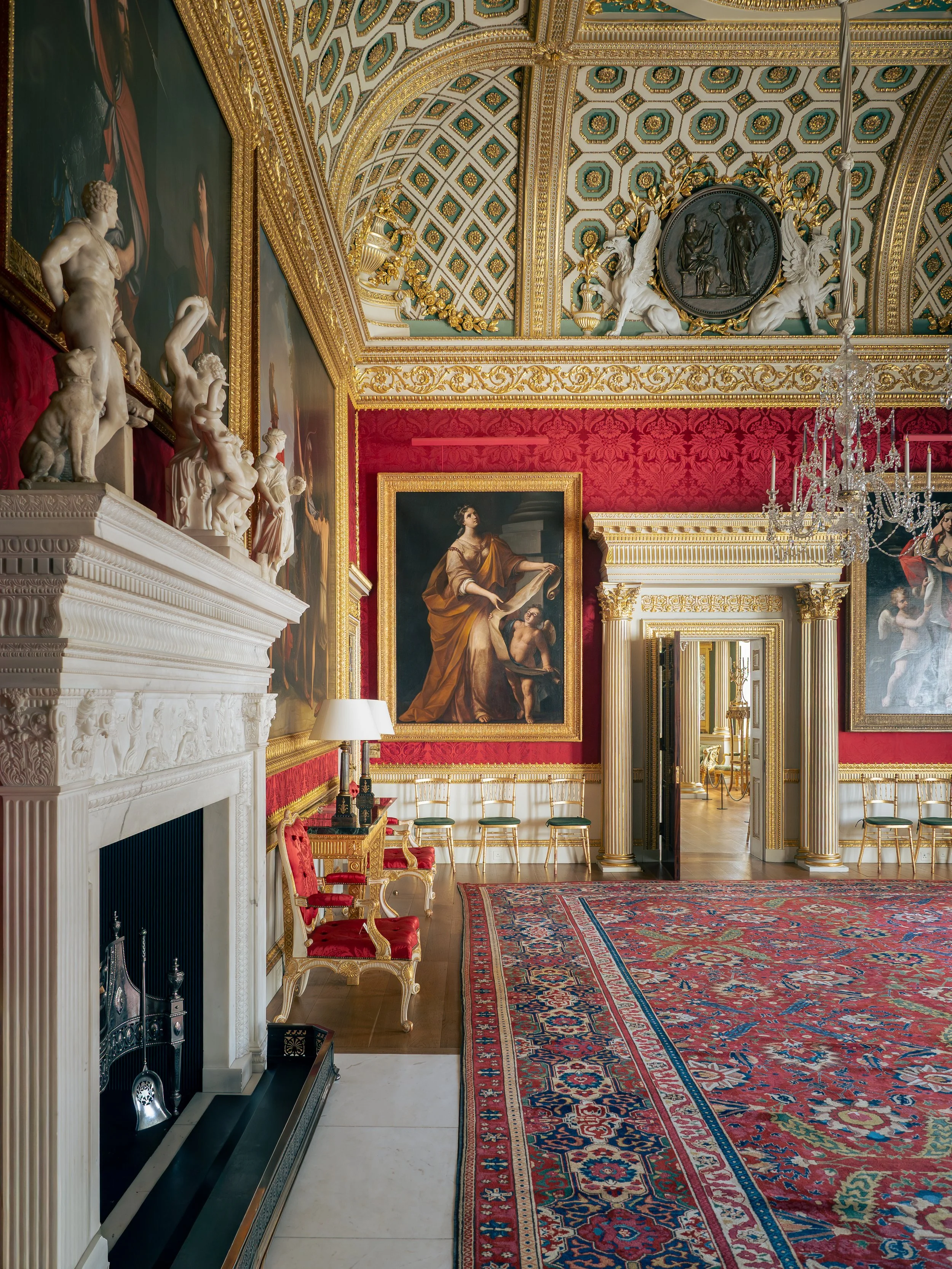
The Great Room - Spencer House - Michael Adair
The Great Room: A Party for the Gods
The Great Room is the undisputed heavyweight champion of the house.
"Great Rooms" were the new must have for London high society at the time, designed specifically to hold grand receptions for hundreds of people. Stuart understood the assignment perfectly. He didn't just build a room; he built a conversation piece.
The ceiling is deeply coved and features coffering derived directly from the Basilica of Maxentius in Rome. Looking down from the ceiling corners are four massive painted medallions representing the ingredients for a good party: Bacchus (god of wine) stares across at Apollo (god of music), while Venus and the Three Graces handle the romance and beauty.
Stuart was obsessive about harmony. He designed the door and window surrounds with a specific pattern, then created matching frames for the Spencers' Old Master paintings so they would integrate perfectly into the walls.
The furniture you see today tells a story of incredible craftsmanship. The fireplace is a replica by the master carver Dick Reid, featuring figures based on the Choragic Monument of Lysicrates in Athens.
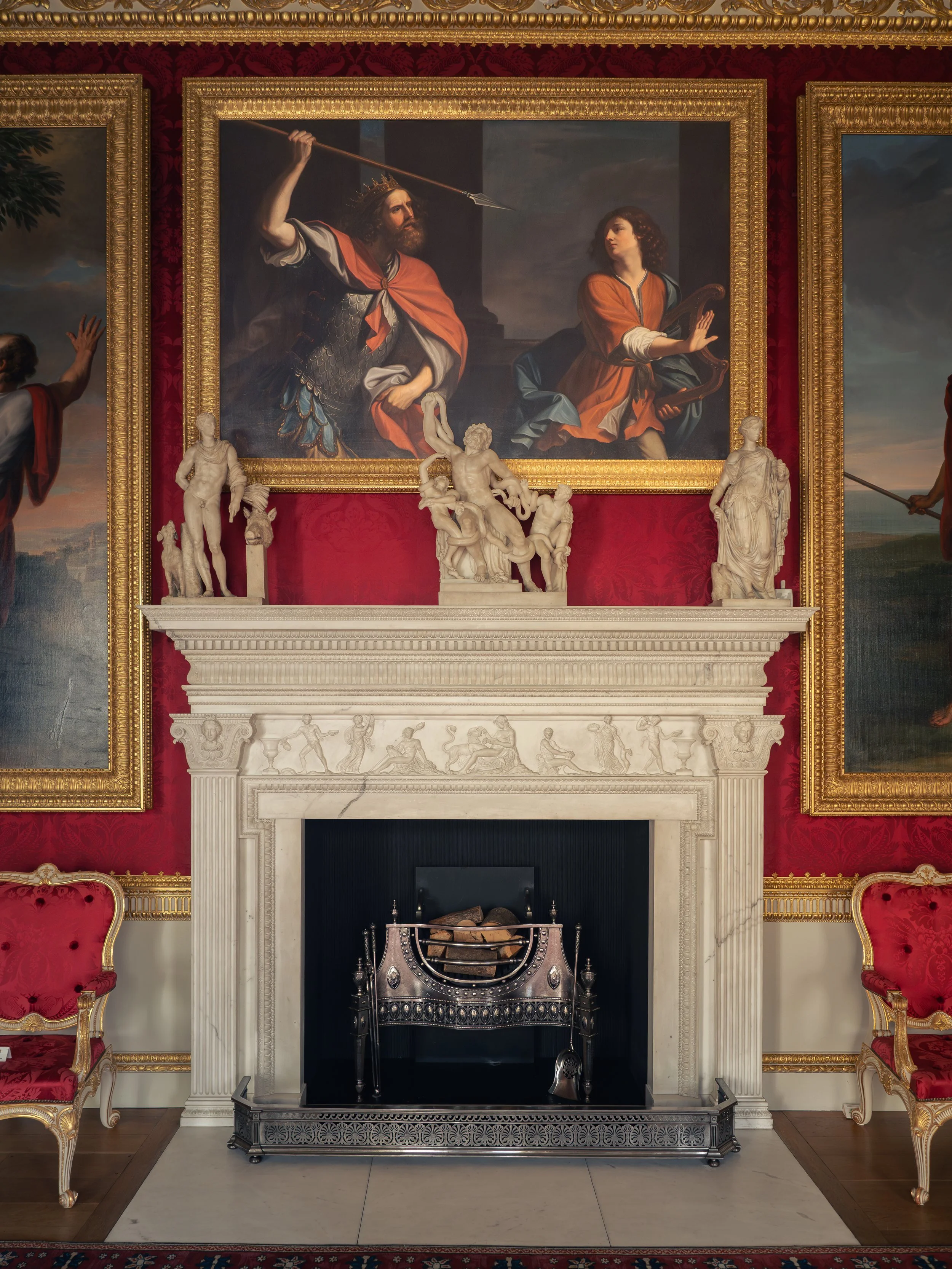
Fireplace Detail - Great Room - Spencer House - Michael Adair
Reid’s team also carved the two massive pier tables and glasses (mirrors). These aren't just standard mirrors; they are topped by charming pairs of putti driving Chariots of Love drawn by griffins. Because why have a normal mirror when you can have one driven by mythical beasts?
A Survival Story
What makes the pristine condition of the house even more impressive is that it shouldn't exist at all.
During the Blitz in WWII, the 7th Earl Spencer had a premonition (or just good common sense) and ordered the house to be stripped. They didn't just take the paintings; they ripped out the fireplaces, door handles, chair rails, dado rails, and skirting boards and shipped everything to their country estate, Althorp, for safekeeping.
It was a smart move. In 1941, a bomb hit the house next door (Bridgewater House). The massive shockwave blew out the windows of Spencer House and caused the spectacular ceiling in the Painted Room to collapse.
For decades, the house sat as a shell, used as offices (imagine that being your cubicle view). It wasn't until the 1980s that Jacob Rothschild took over the lease and launched one of the most ambitious restoration projects in British history. Because the Spencers had saved all the "bones" in storage, the team could put the original 18th century pieces back into place, like a giant, gold leaf jigsaw puzzle.
The practical details:
The house is open to the public on Sundays (and select other dates, so do check their website). Because it is a bit of a hidden gem, you avoid the massive crowds of other major museums and homes in London.
If you appreciate Neoclassical design, or just want to see how the other half lived (and entertained), this is a must visit.