Sambourne House: A masterclass in Victorian clutter
Sambourne House - Michael Adair
The House Where 1899 Never Ended Sambourne House: A masterclass in Victorian clutter and artistic obsession.
Sambourne House - Michael Adair
Most historic homes in London feel scrubbed. The curtains are too crisp, the paint is too fresh, and you get the distinct feeling that a curator has just run a vacuum cleaner through the place five minutes before you arrived.
Sambourne House is different.
Located at 18 Stafford Terrace in Kensington, this townhouse is arguably the most immersive time capsule in the city. It hasn't just been "restored" to look like the late 19th century; it essentially never left. It was the home of the illustrator Edward Linley Sambourne and his family from 1875, and when you walk through the door, the atmosphere is so thick you can almost cut it with a knife. It smells of beeswax, old paper, and the faint, lingering ghost of cigar smoke.
It is rare to find a space that feels so vividly inhabited. You half expect the owner to walk down the stairs, adjust his cravat, and ask why you are standing in his hallway.
The Aesthetic Dream
If you want to understand the "Aesthetic Movement" (think Oscar Wilde, peacocks, and "Art for Art’s Sake"), you don't need a textbook. You just need to stand in this living room.
The Sambournes were obsessed with the idea of the "House Beautiful." This meant filling every available square inch of surface area with objects. But unlike the heavy, stuffy Victorian style of the generation before, the Aesthetes wanted beauty, pattern, and foreign romance.
Sambourne House - Michael Adair
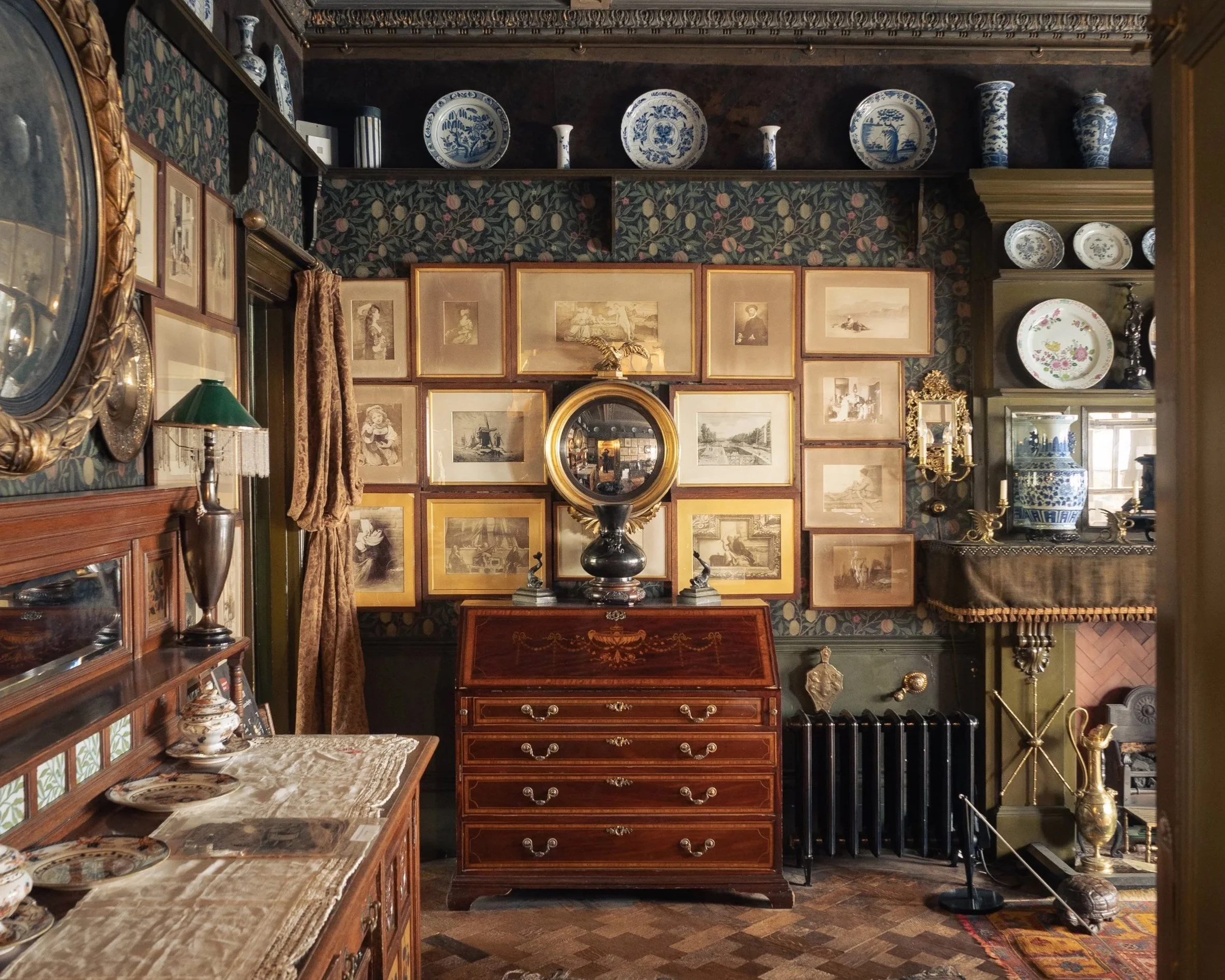
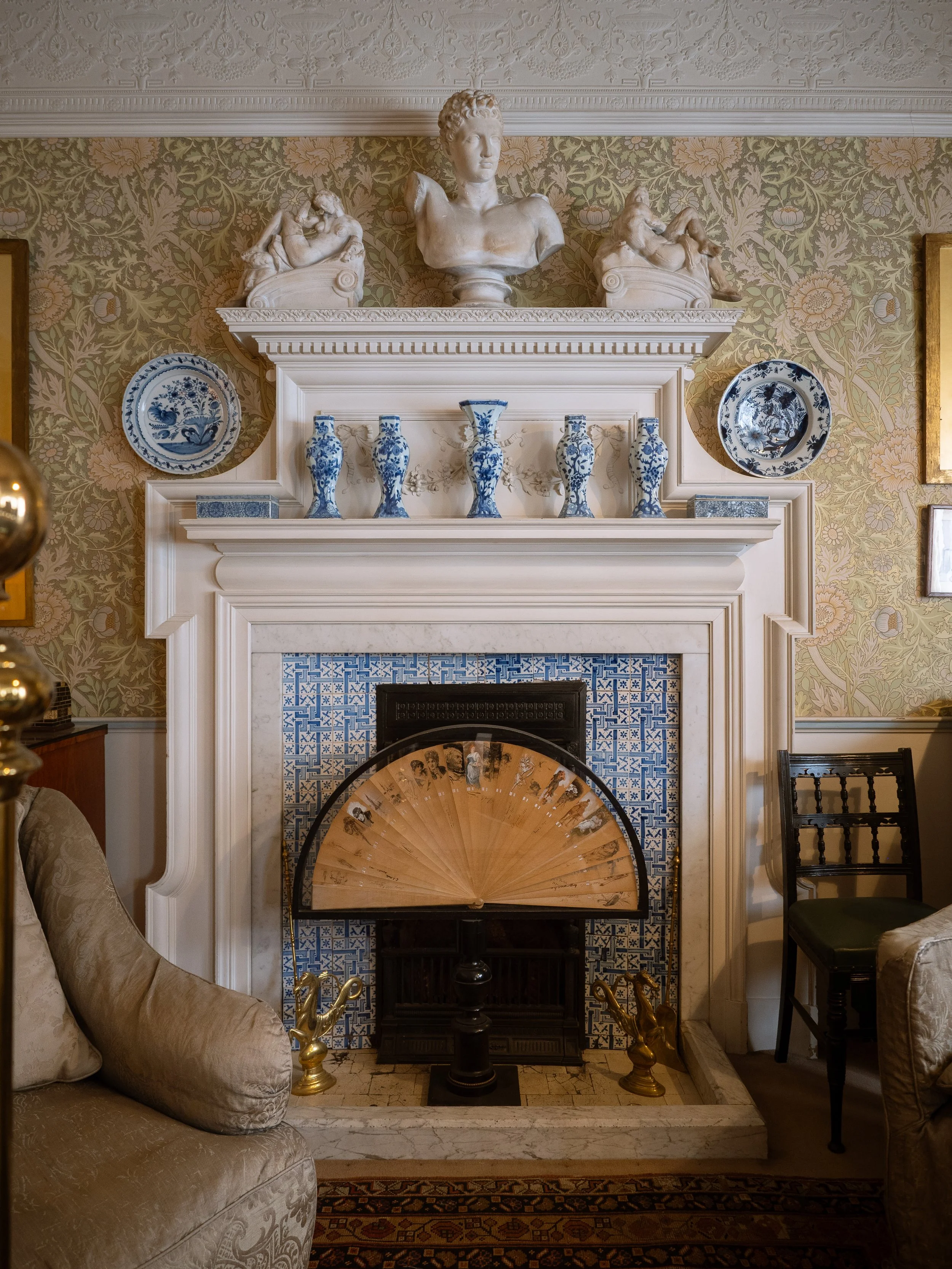
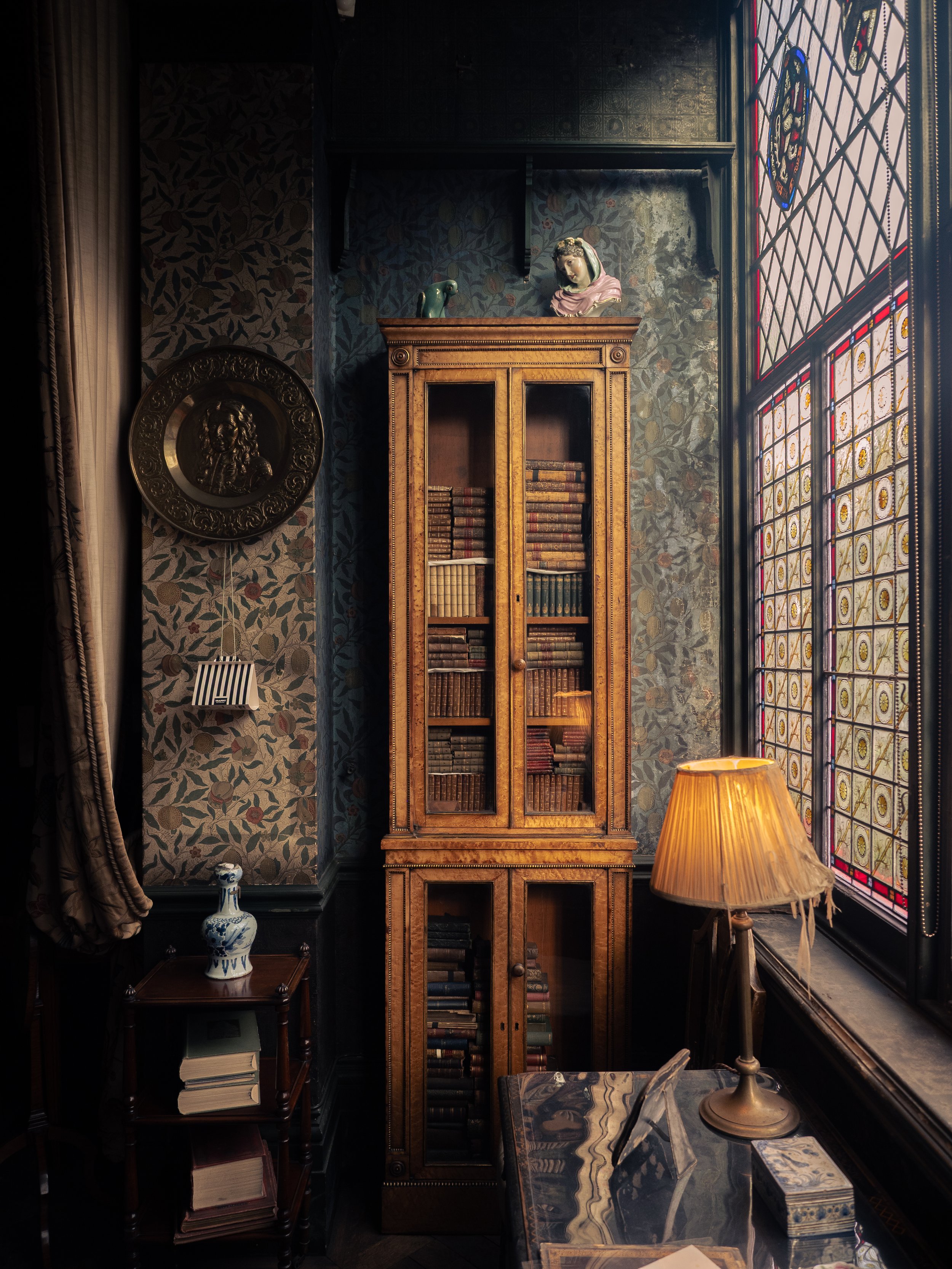
The result is a visual overload that somehow works perfectly. The walls are covered in William Morris papers (specifically the "Pomegranate" and "Larkspur" patterns). There is blue and white Chinese porcelain on the shelves, Japanese prints on the walls, and stained glass on the windows.
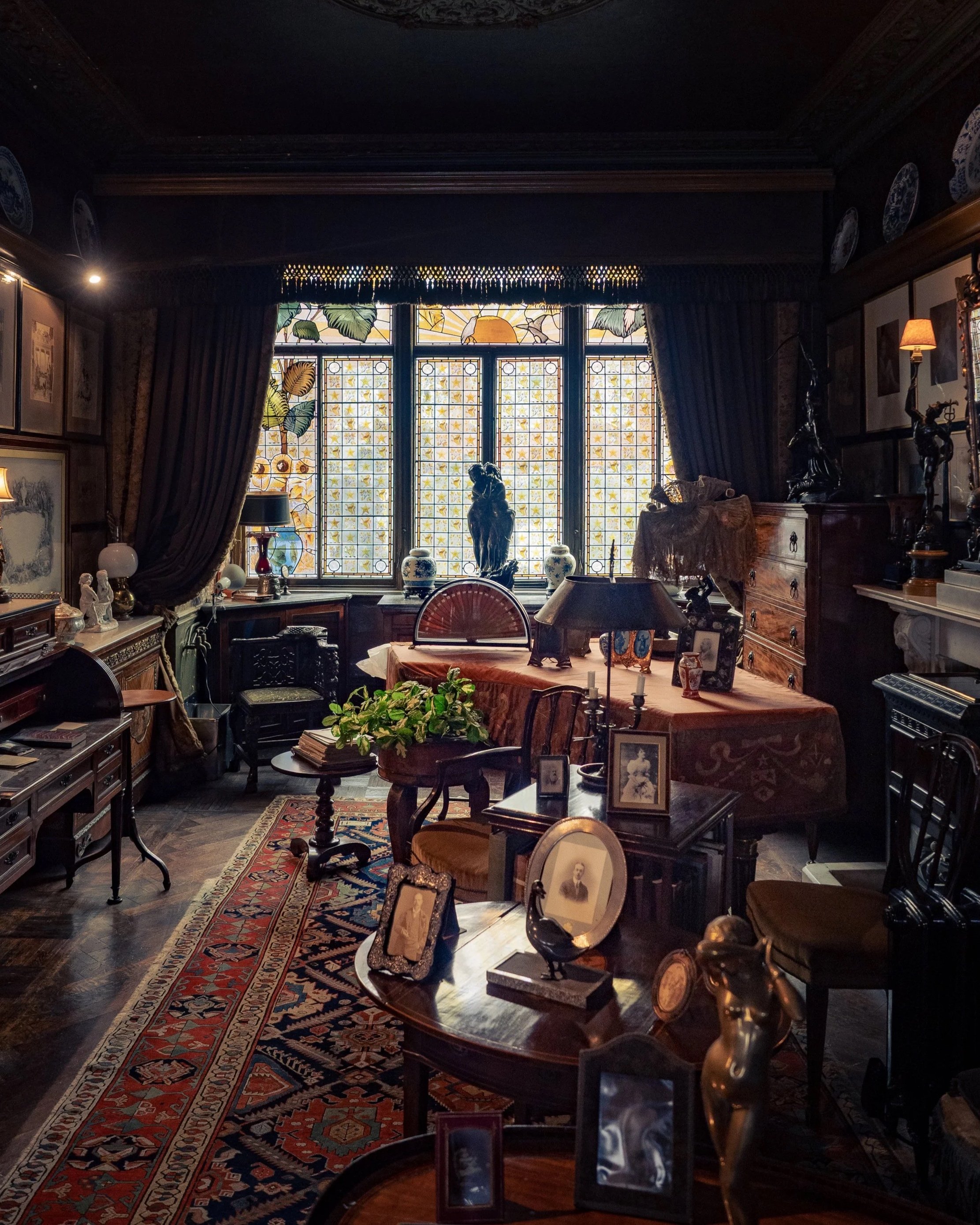
In fact, the stained glass is a crucial detail. Sambourne didn't like the view of the brick walls and neighbours outside, so he simply blocked them out. He installed amber and green stained glass in the rear windows, meaning that even on a grey London afternoon, the light inside is bathed in a permanent, golden "afternoon" glow. It is an early form of Instagram filter, installed in 1875.
The Man from Punch
The man responsible for this artistic hoarding was Edward Linley Sambourne. He was the chief cartoonist for Punch magazine, which in the Victorian era was the cultural equivalent of hosting The Daily Show. He was a celebrity, a dandy, and a man who knew everyone worth knowing.
Because he had to produce a satirical cartoon every single week for decades, the house acted as his reference library. He didn't just live here; he worked here. The house is filled with props, costumes, and military uniforms that he would pull out whenever he needed to draw a specific figure for the magazine.
Sambourne House - Michael Adair
The drawing room wasn't just for tea; it was a stage set. If you look closely at the furniture, you are looking at the background of hundreds of political cartoons that mocked Disraeli, Gladstone, and the absurdities of British Imperial life.
The Secret Studio
For a photographer, the most fascinating part of the house is hidden in the bathroom.
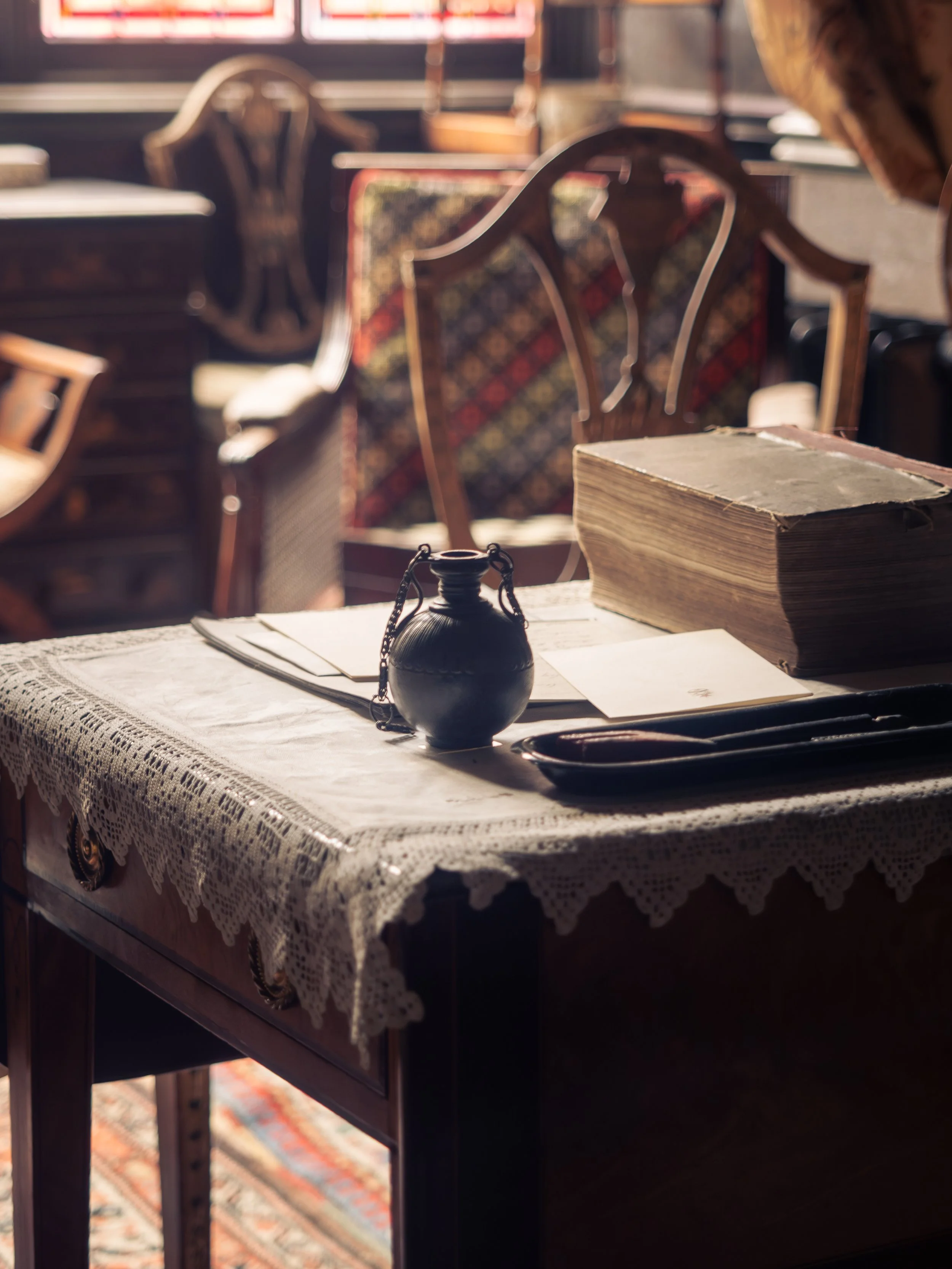
Sambourne was an obsessive amateur photographer. He realized early on that it was easier to draw from a photo than to make a model hold a pose for four hours. He reportedly snapped over 30,000 images in his lifetime. He turned the family bathroom into a makeshift darkroom, developing his cyanotypes in the bathtub.
But his hobby had a slightly eccentric edge. He was constantly recruiting his family and servants to pose for him. There are archives of his parlour maids dressed up as Greek goddesses, or his daughter Maud posing in flowing robes.
Sambourne House - Michael Adair
He also had a massive collection of "artistic nude" photography.
He claimed these were strictly for anatomical reference for his cartoons, which was technically true, though he certainly seemed to enjoy the collecting process. He belonged to the "Camera Club" and was a pioneer of street photography, capturing candid shots of Londoners that provide a rare, unposed look at Victorian life.
The Saviour
The reason this house exists today is down to one woman: Anne Messel, the Countess of Rosse.
She was Sambourne's granddaughter (and incidentally, the mother of Lord Snowdon, making her the mother in law to Princess Margaret). In the mid 20th century, when everyone else was ripping out "hideous" Victorian interiors to paint everything white and modern, she did the opposite. She fell in love with her grandfather’s clutter.
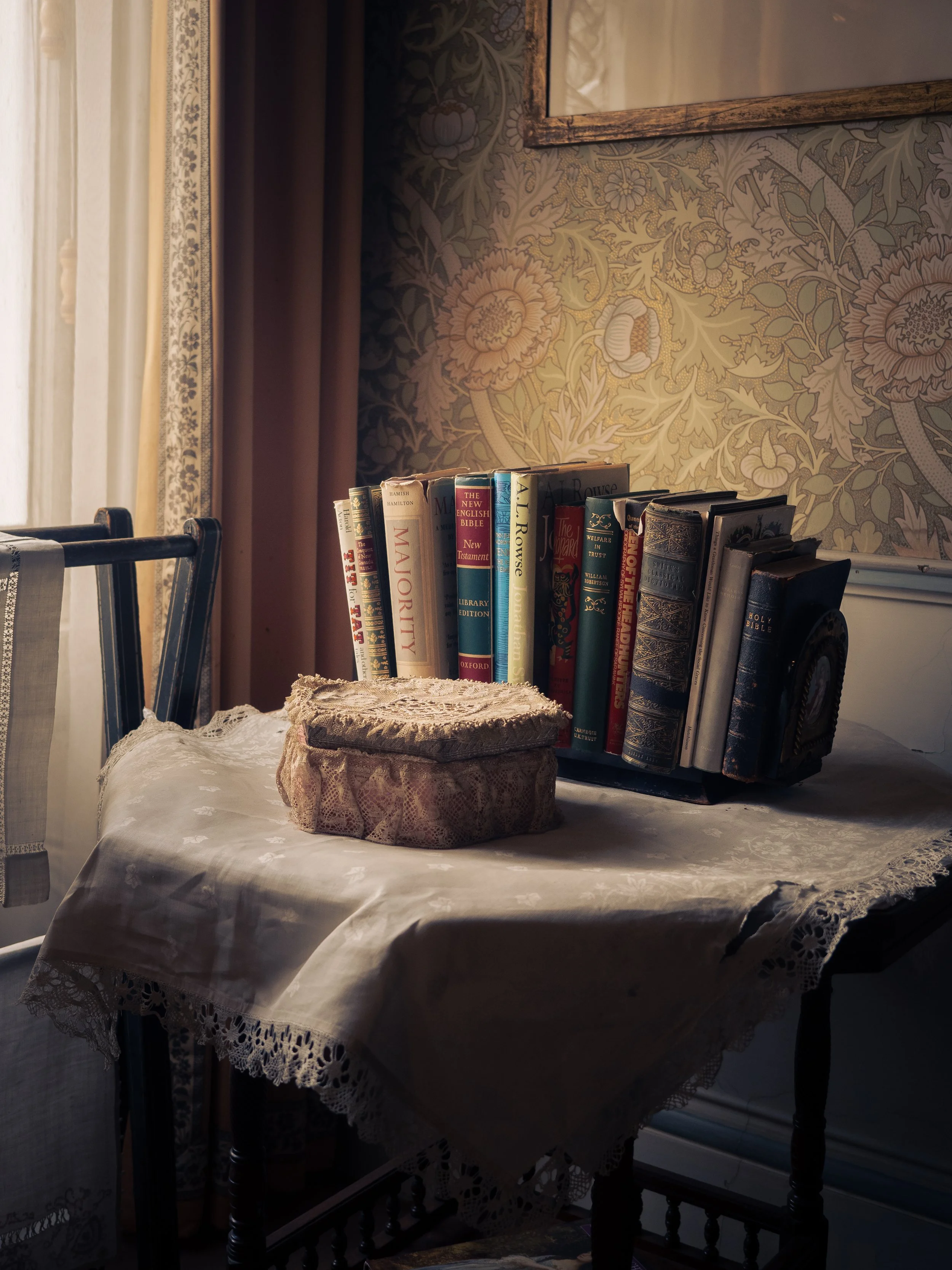
She recognized that 18 Stafford Terrace was a unique survival of a lost world. She founded the Victorian Society specifically to save places like this. She kept the house exactly as her grandparents had left it, right down to the jar of apricots in the pantry and the signed photos on the mantelpiece.
Sambourne House - Michael Adair
The Practical Details
Access: You can visit by guided tour or "open house" slots on Wednesday, Saturday, and Sunday. I highly recommend the guided tour if you want the gossip about the family.
The Stairs: Be warned, there are a lot of them, and the house is narrow. It is not a place for large backpacks.
Combo Ticket: It is managed by the same team as Leighton House (the grand palace of Lord Leighton) nearby. You can buy a combined ticket to see both. It creates a perfect contrast: Leighton House is the palace of a bachelor millionaire painter, while Sambourne House is the cozy, cluttered home of a working family man.
If you love pattern, photography, or just being nosy about how people actually lived in 1899, this is the best ten pounds you will spend in London.