The Painted Hall: The Sistine Chapel of South London
Old Naval Collage - Michael Adair
Old Naval Collage - Michael Adair
The Painted Hall at the Old Naval College
Old Royal Naval College Website | Map
Greenwich can feel like a bit of a trek from central London, but you need to go. Specifically, you need to go to the Old Royal Naval College.
When you arrive, you will see two massive, twin domed buildings designed by Sir Christopher Wren that look like they should house a King. And originally, they were meant to. But due to a lack of funds and a shift in royal priorities, this grand riverside palace became the Royal Hospital for Seamen.
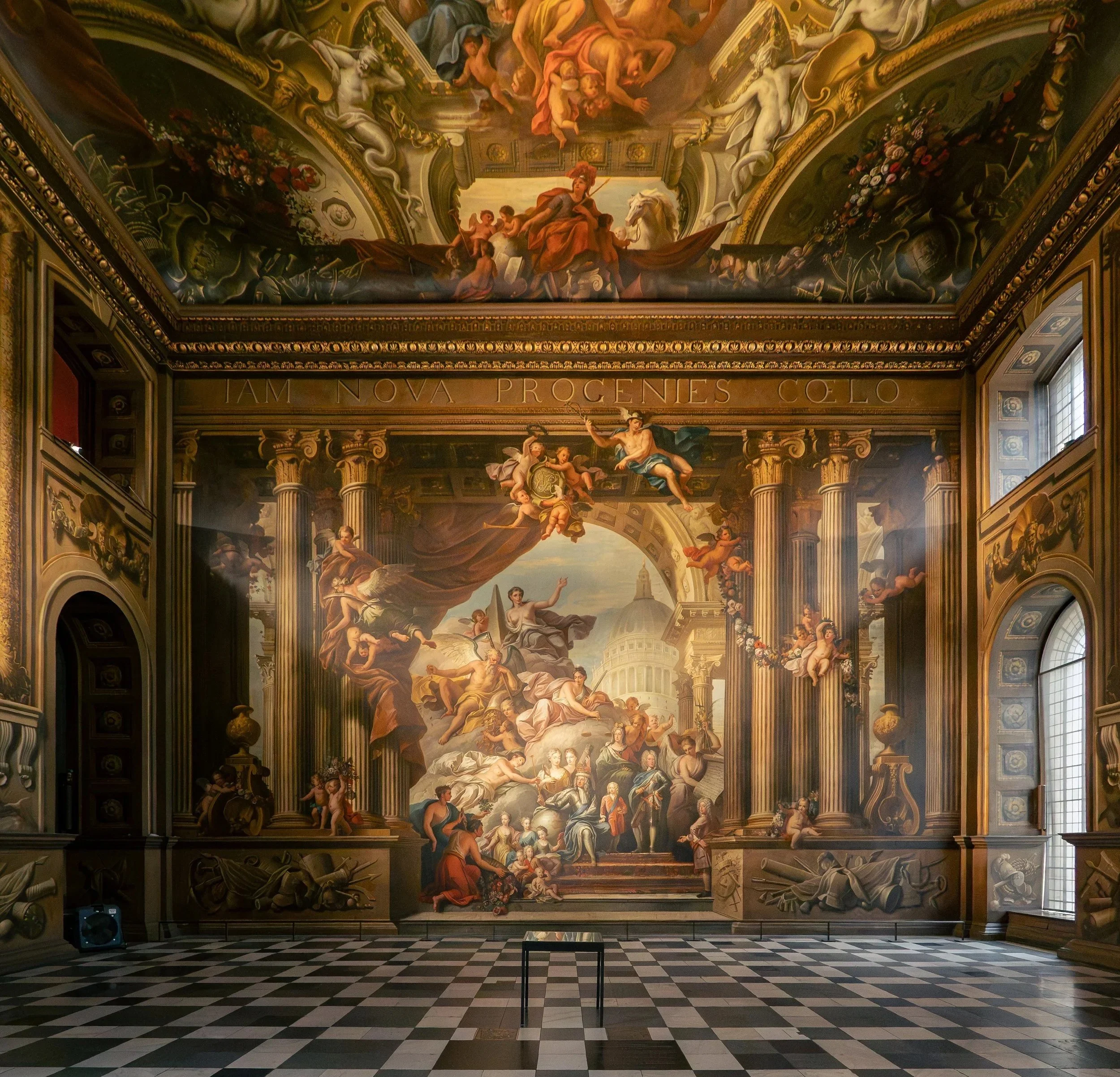
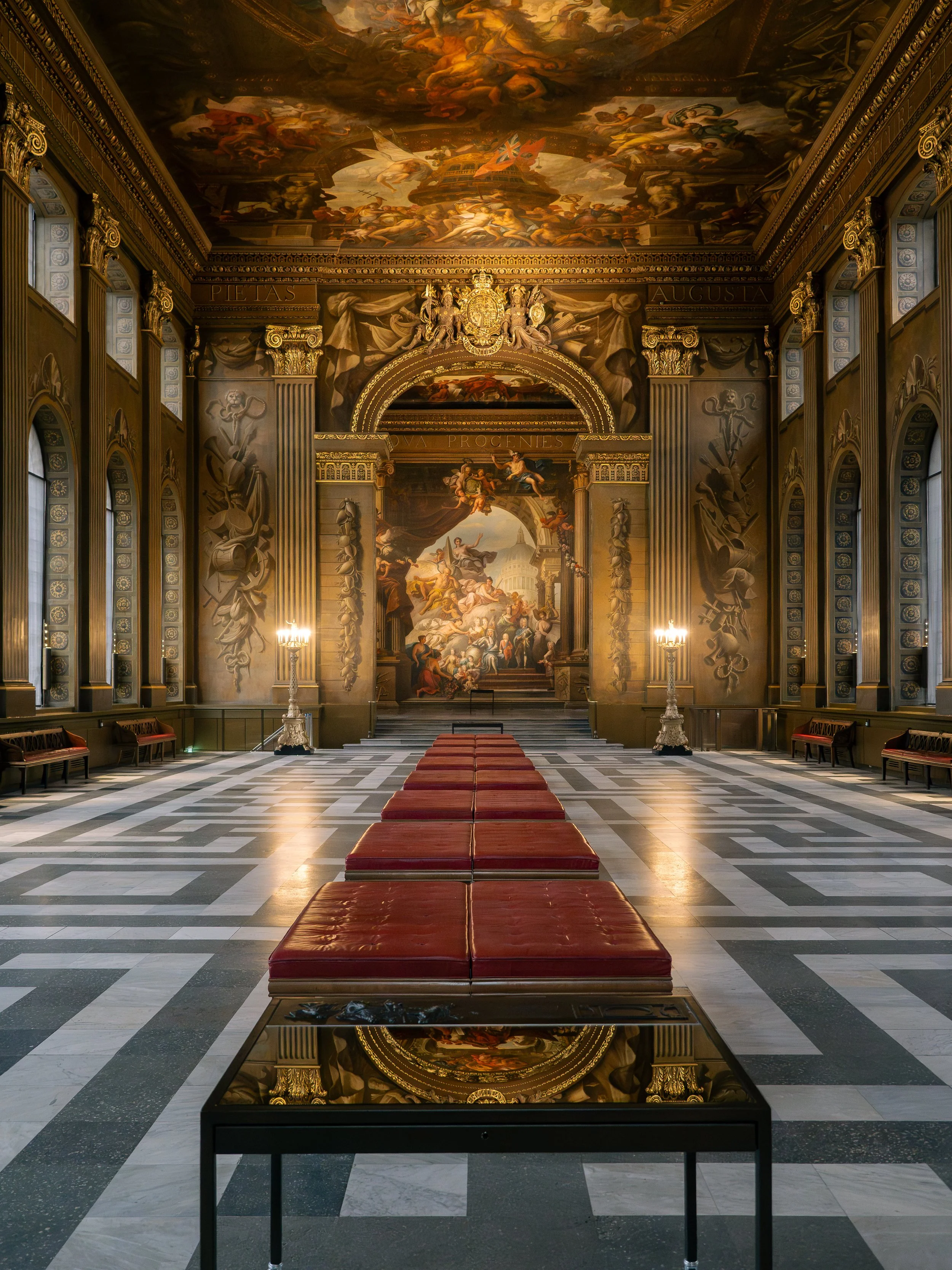
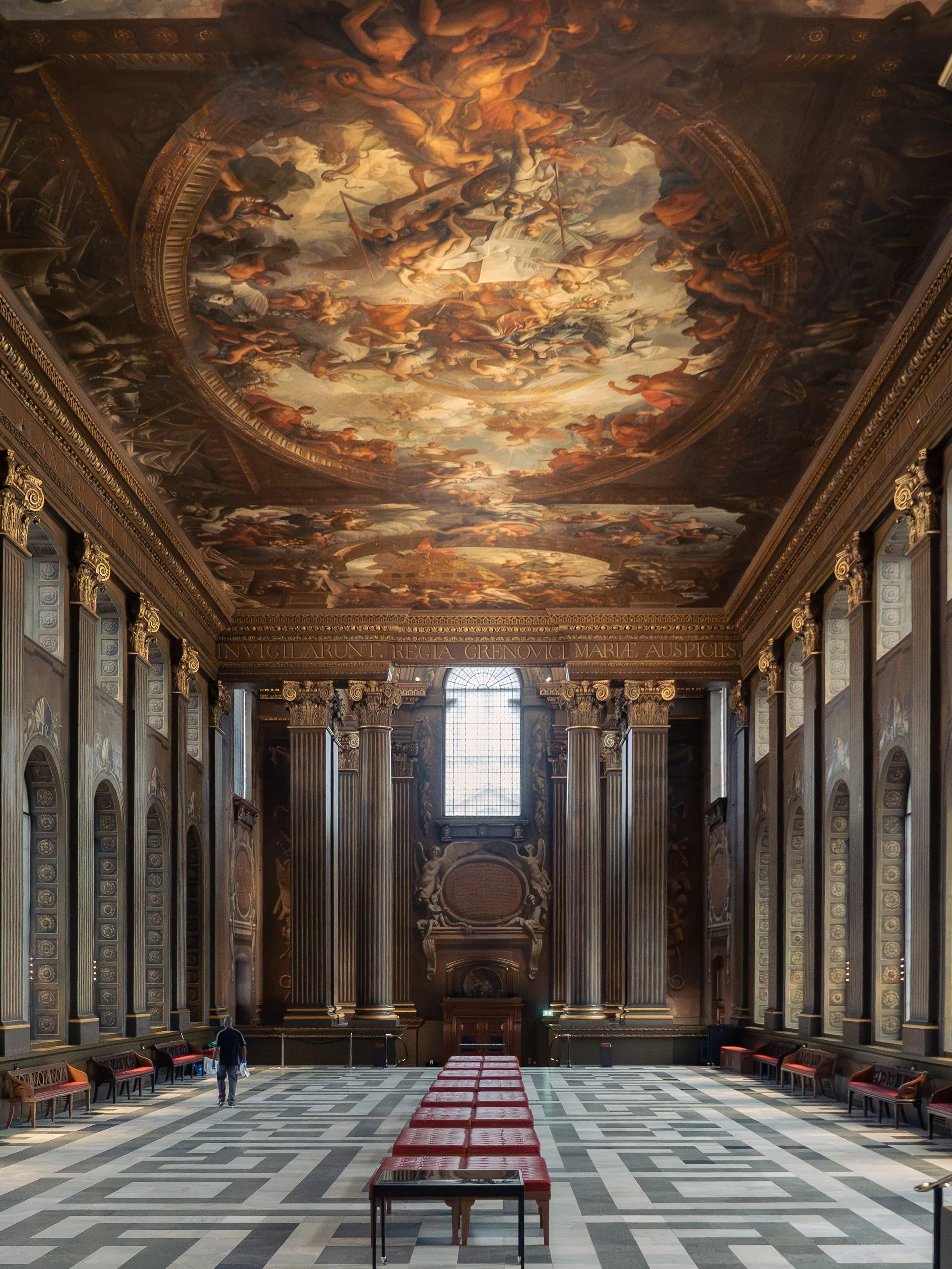
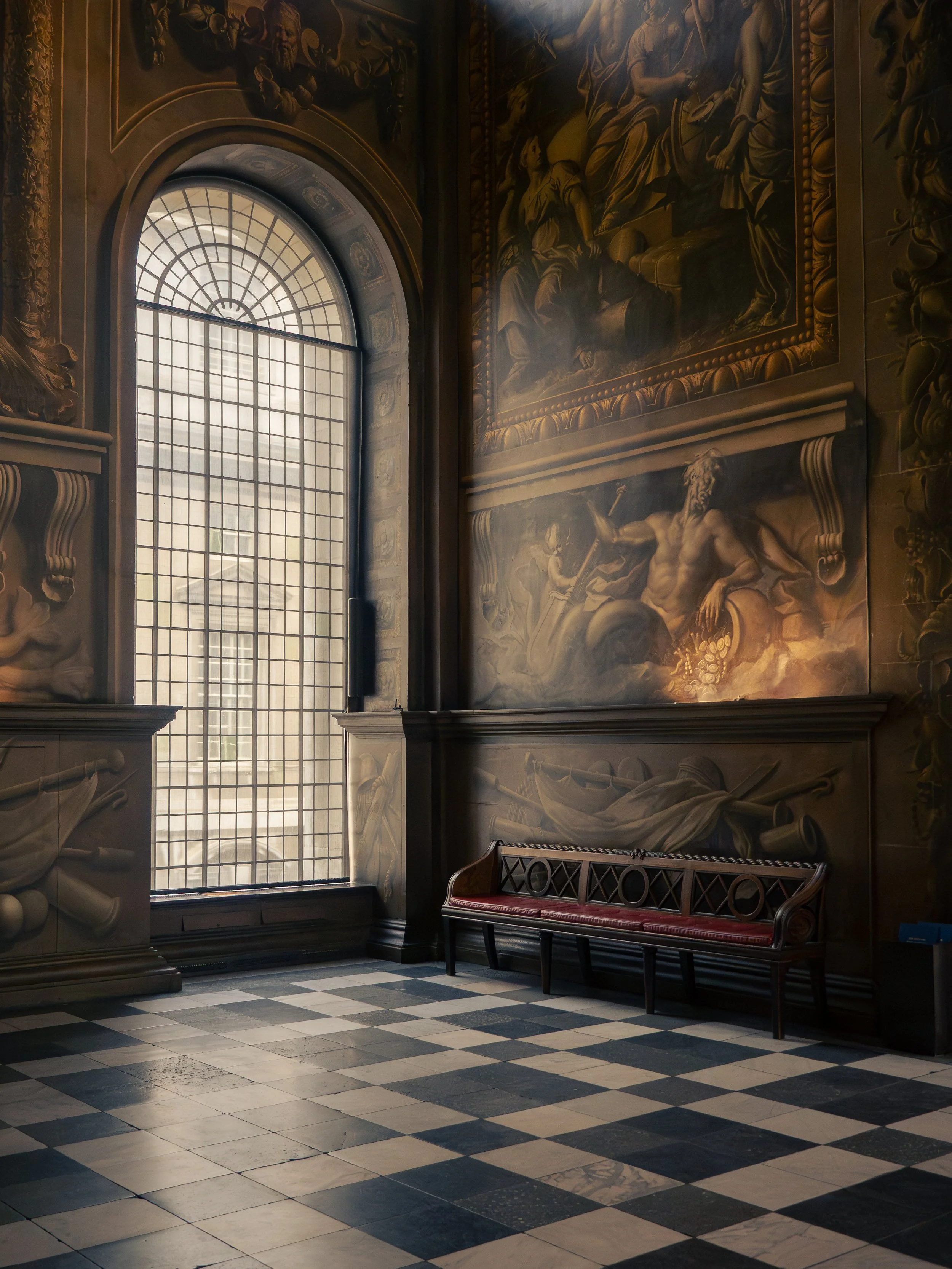
That means for centuries, this wasn't the home of royalty; it was a retirement home for injured sailors. And the room you are about to walk into, arguably the finest Baroque interior in Britain, was their dining hall. Imagine eating your morning porridge while staring up at 40,000 square feet of gods, kings, and political propaganda.
It is a magnificent absurdity where the smell of boiled beef once mingled with the scent of high art. But make no mistake: this luxury wasn't for the sailors' benefit. It was a calculated power move to show the world, and specifically the French, that Britain was so wealthy it could house its broken veterans in a palace better than Versailles.
Old Naval Collage - Michael Adair
The Nineteen Year Slog
The Painted Hall is the masterpiece of Sir James Thornhill. If you haven't heard of him, don't worry; he is the unsung hero of British art. He started painting this room in 1707 and didn't finish until 1726. For nineteen years, he spent his days lying on his back on scaffolding, inhaling paint fumes and plaster dust. The physical toll was immense because Thornhill did not use the quick drying fresco technique common in Italy. He worked with oil paint directly on dry plaster. This method allowed for richer colors and greater detail but it required agonizing patience and significantly extended the timeline of the project.
The most tragic (and hilarious) part of the story is how he was paid. He wasn't given a flat fee for his genius. The Crown paid him by the square yard, exactly as if he were fitting a carpet or painting a fence. He received £3 per square yard for the ceiling and only £1 per square yard for the walls because they were "less difficult" to reach. The total bill for two decades of labor came to £6,685. Circa £1.7 millon today.
If you look closely at the west wall of the Lower Hall, you can actually spot Thornhill. He painted himself into the scene as an older man. His hand is outstretched, and local legend says he is eternally asking for more money. Given the invoice arrangement, you can hardly blame him. But he did not just paint aristocrats. He included the people who actually lived here.
The allegorical figure representing Winter is a portrait of John Worley, a real naval pensioner who entered the hospital at age ninety six. He immortalized a simple sailor alongside kings and queens. Thornhill eventually got the last laugh by becoming the first British artist in history to be knighted for his work in 1720, though looking at his weary expression, I suspect he might have preferred the cash.
Old Naval Collage - Michael Adair
Political Propaganda in Paint
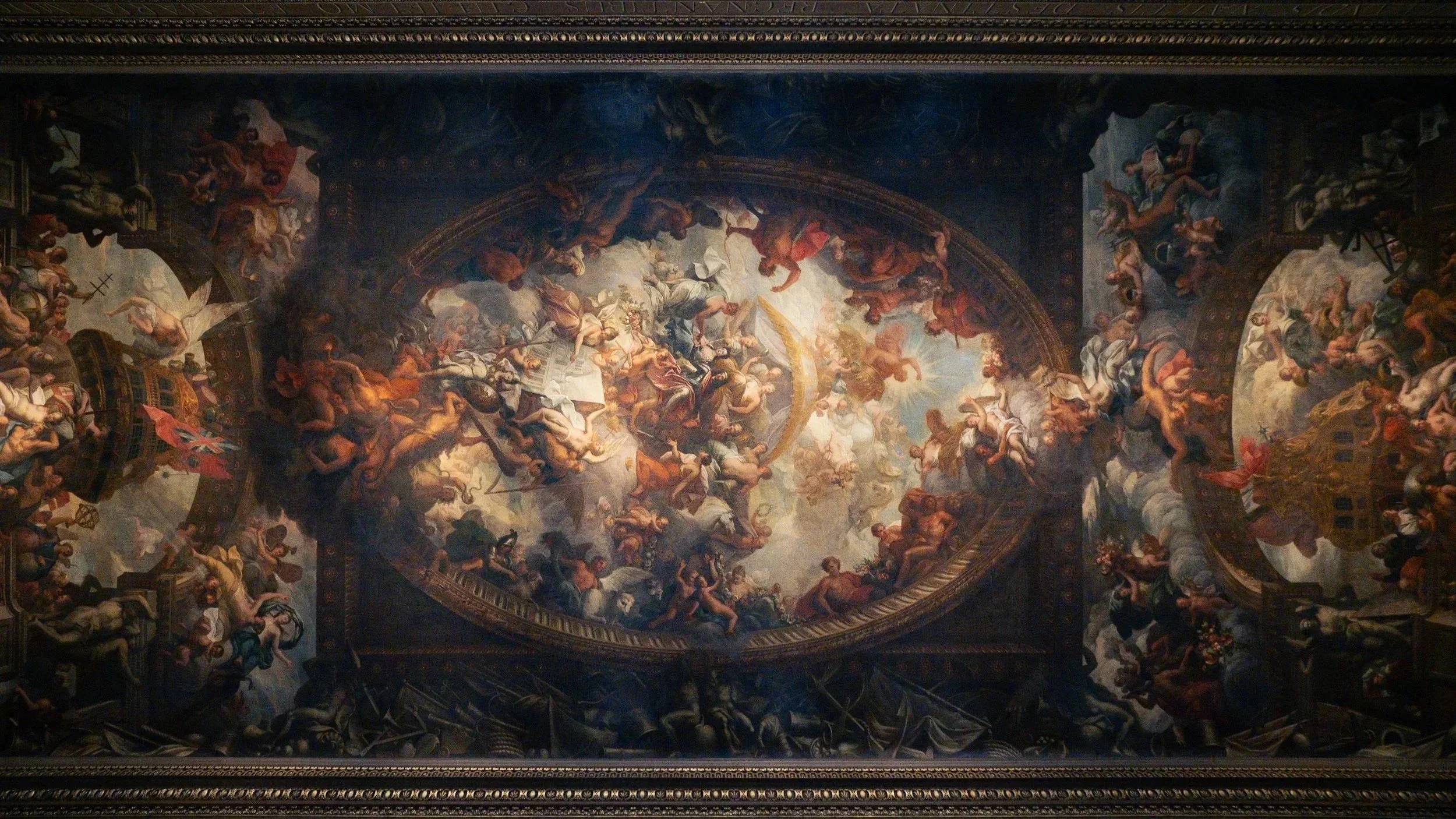
This room wasn't just decoration; it was a political statement. The central oval on the ceiling depicts King William III and Queen Mary II seated in glory. But look at what is happening under their feet.
They are literally trampling a crouching figure representing "Arbitrary Power" (a not so subtle dig at the French King Louis XIV) and kicking away the symbols of tyranny. It is a riot of colour celebrating the Protestant succession and the triumph of Britain as a naval superpower. Thornhill filled the edges with ships, anchors, flags, and allegories of the four rivers, effectively creating a 360 degree advertisement for the Royal Navy. It is loud, it is chaotic, and it is absolutely magnificent.
Just to make sure you don't miss the point, Thornhill gave the trampled figure a shattered sword, which was a direct visual metaphor for the destruction of absolute monarchy. It is effectively a massive, ceiling sized billboard telling the rest of Catholic Europe that the game was over and Britain had won.
Old Naval College - Michael Adair
The Nelson Connection
The mood of the Hall changes instantly when you hear its most famous story.
In January 1806, three months after the Battle of Trafalgar, the body of Vice Admiral Lord Nelson was brought here to lie in state. The room was draped entirely in black velvet, covering all of Thornhill’s bright colours. Candles were placed along the gallery, and for three days, thousands of weeping Londoners filed past the coffin to pay their respects to the national hero. It was a moment of national mourning on a scale that is hard to imagine today.
The crowds were so immense that the militia had to be called in to control the mobs, and reports from the time describe people being trampled in the desperate crush just to get a glimpse of the coffin. After this, the body was carried down the water steps to a waiting royal barge for a grand river procession to Whitehall, marking the final journey of the man who had truly secured Britain's rule over the waves.
There is a plaque on the floor marking the exact spot where the coffin stood. Standing there, amidst the Baroque splendour, gives you a genuine chill.
The Ultimate Stunt Double
You have seen this room before. You have seen it while eating popcorn on your sofa. The Painted Hall is the architectural equivalent of a highly paid Hollywood stunt double. Whenever a director needs a location that screams "unlimited power" but cannot get permission to film in an actual royal palace, they call Greenwich.
It is the industry favourite for one simple reason. It looks convincingly like a generic Grand European Palace, yet it lacks the annoying modern clutter of radiators, alarm sensors, or tourists. It is a blank canvas of Baroque majesty waiting for a costume drama to happen.
A Resume to Die For
The Hall is a chameleon. It played the Vatican in The Young Pope and stood in for Buckingham Palace in The Crown. When Meryl Streep needed a backdrop for political maneuvering in The Iron Lady, she came here. It even served as a Parisian barricade site for Les Misérables and a Venetian ballroom for Angelina Jolie in The Tourist.
The Practical Details
Tickets: You do need a ticket to enter (it used to be free, but conservation costs are massive). It includes an audio guide which is actually very good.
The Skittle Alley: While you are there, ask if the Victorian Skittle Alley in the basement is open. It is a bowling alley built for the pensioners in the 1860s to stop them from going to the pub. It is a rare glimpse into the real lives of the sailors who lived here.
The 500 Years Tour: If you have time, take the guided tour. The site was originally Greenwich Palace, the birthplace of Henry VIII and Elizabeth I. The guides are excellent at explaining how the site went from Tudor power base to naval hospital.
It is the Sistine Chapel of the UK, but with more ships and a better backstory about the invoice.