Sir John Soane’s Museum: An eccentric treasure house.
Sir John Soane’s Museum - Michael Adair
Sir John Soane’s Museum - Michael Adair
If you walk along the north side of Lincoln's Inn Fields in London, you will pass a row of stately, polite Georgian townhouses. But when you get to number 13, things get weird. The facade projects out into the street, made of Portland stone, featuring Gothic corbels and caryatids that seem to stare judgmentally at the passersby.
Do not walk past.
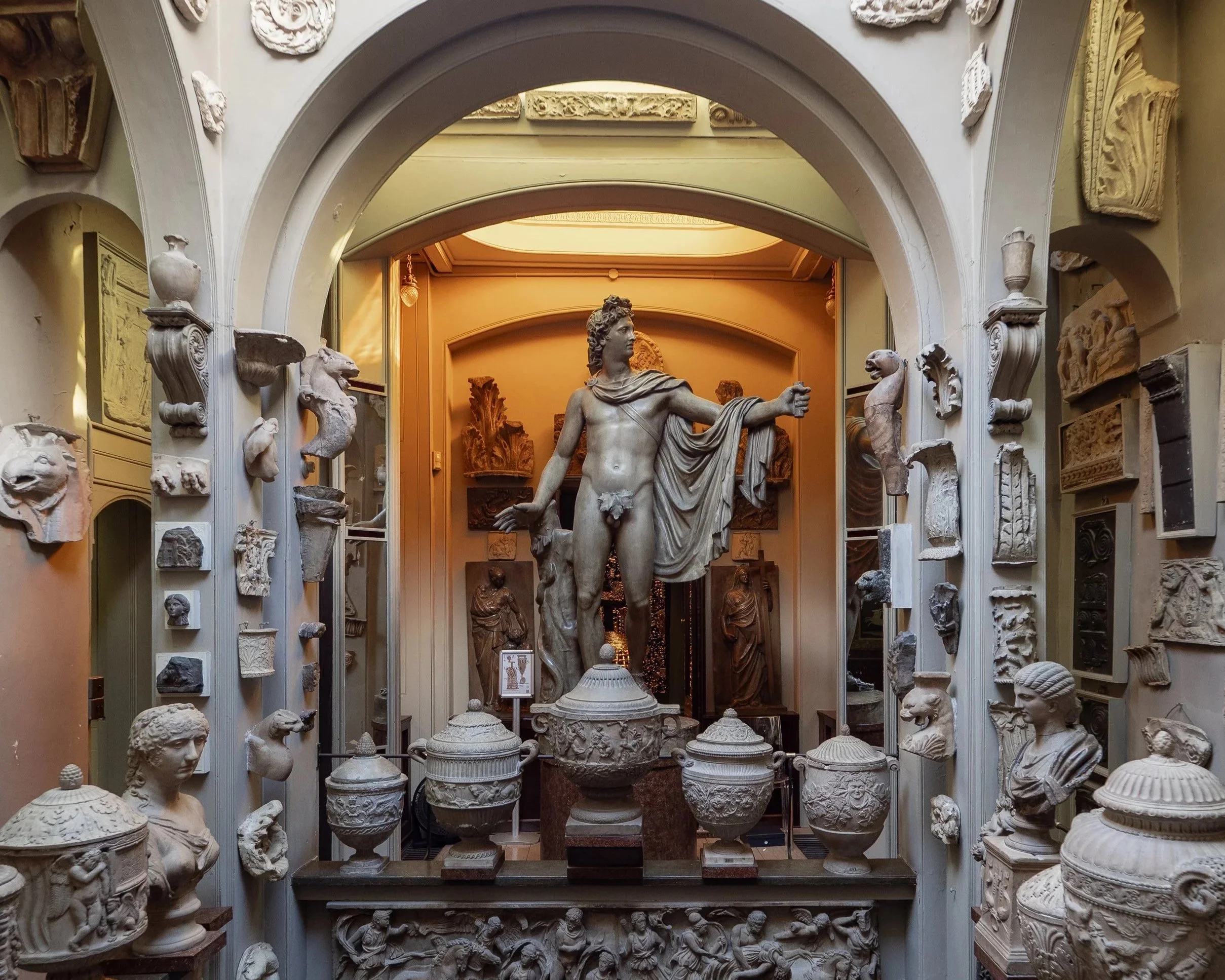
This is the Sir John Soane’s Museum, and it is arguably the most singular, personal, and overwhelmingly atmospheric space in London. It was the home of Sir John Soane (1753–1837), the brilliant architect who gave us the Bank of England and the Dulwich Picture Gallery. But Soane wasn't just an architect; he was an obsessive collector who spent his life packing these three houses (numbers 12, 13, and 14) with over 45,000 objects, ranging from Roman marbles and Peruvian pottery to the skeleton of a disturbingly large fish.
Most museums are curated by committees who care about things like "flow" and "labels." This one is the frozen vision of one man who was so terrified that his legacy would be ruined by his wayward son that he negotiated a private Act of Parliament in 1833. The Act stipulated that upon his death, the house and its contents must be preserved "as accurately as possible" in the state they were left in.
He essentially legally mandated that no one could touch his stuff. And for nearly 200 years, nobody has.
The Master of Light
When you enter, you aren't greeted by bright spotlights and helpful placards. You are greeted by shadows.
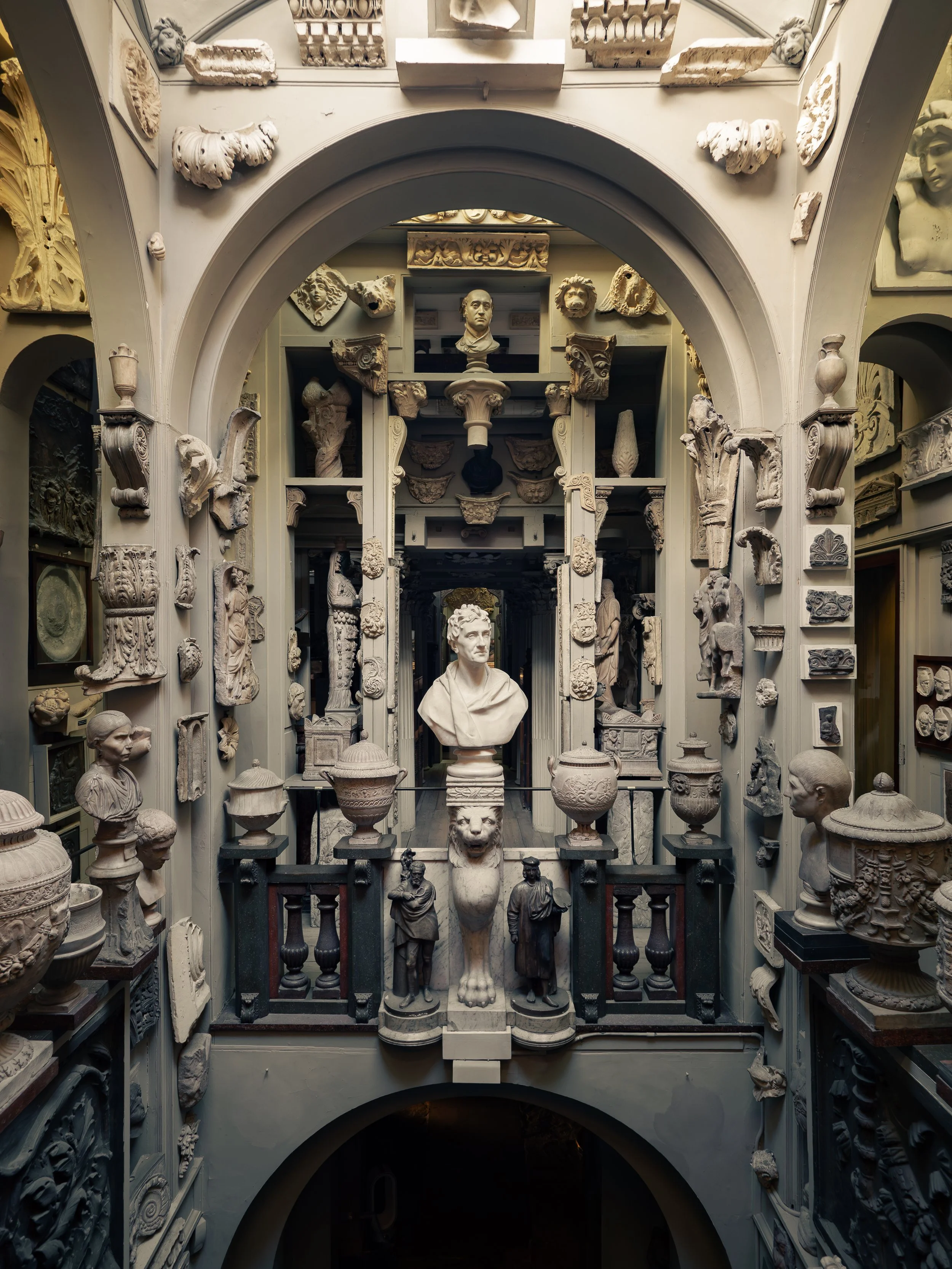
Soane was a master of what he called the "poetry of architecture." Because the house is a narrow terrace, he couldn't rely on windows on all sides to illuminate his treasures. Instead, he carved out the interior with light wells, skylights, and coloured glass. He used over 100 mirrors throughout the house, often convex ones placed in dark corners, to catch and recycle the available light.
The result is a mood that feels more like a Gothic novel than a gallery. In the Dome Area, you can look down into the basement or up into the heavens. Busts of Roman emperors line the rails, staring at you from the gloom. It is a lesson in how to create drama with nothing but sunshine and stone.
Sir John Soane’s Museum - Michael Adair
The Ultimate "Cabinet of Curiosities"
Soane didn’t collect art to invest; he collected it to inspire his students and, frankly, to show off. The house is a labyrinth.
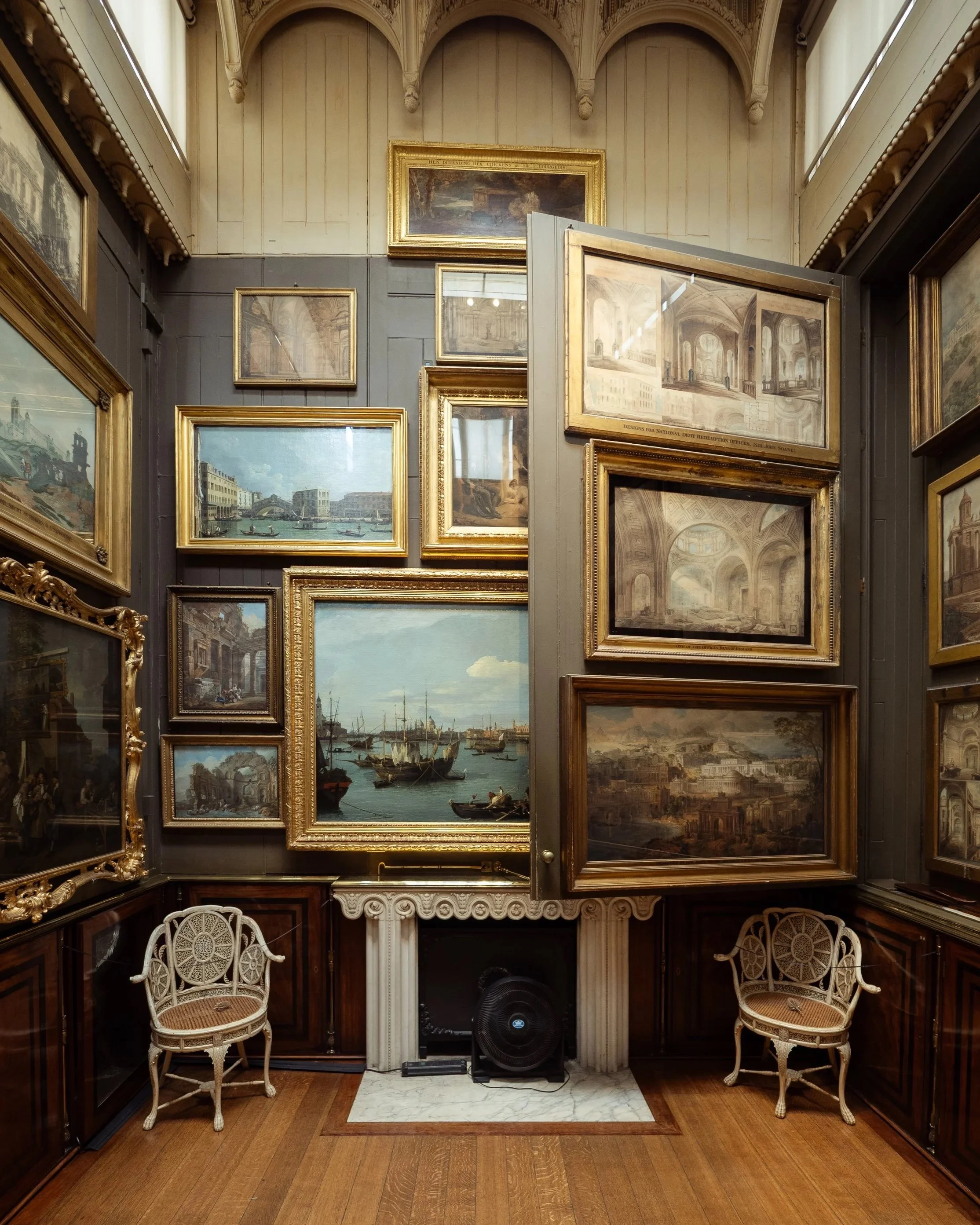
The most ingenious room is the Picture Room. It is a tiny space, roughly 4 meters square, which sounds far too small to house a world class art collection. But Soane installed "movable planes", essentially walls on hinges that open up like cupboard doors.
When the walls are closed, you see one set of paintings. Open them up, and you reveal another layer. Open those, and you look down into the "Monk’s Parlour" below. By using this trick, Soane managed to hang 118 paintings in a room that should only hold a dozen. The heavy hitters here are William Hogarth’s two famous series, A Rake’s Progress(bought for £570) and An Election (bought for £1,732). He also squeezed in a stunning Canaletto, Riva degli Schiavoni, which hangs rather casually amidst the clutter. Watching the guard unfold the walls is one of the great theatrical moments of London tourism.
The Breakfast Room: An Architectural Magic Trick
Before you get lost in the artifacts, stop in the Breakfast Room. This room is considered one of the most influential spaces in the history of interior design.
Soane designed a shallow, handkerchief dome ceiling that doesn't actually touch the walls. instead, it floats, allowing light to pour in from hidden skylights around the edges. He then placed convex mirrors in the spandrels of the ceiling. As he wrote in his own description of the house, these mirrors were intended to present "a succession of those fanciful effects which constitute the poetry of Architecture." The room is small, but the way the light hits the yellow glass and bounces off the hundreds of surfaces makes it feel like you are sitting inside a jewel.
The Party for the Dead
Sir John Soane’s Museum - Michael Adair
Descend into the basement (the "Sepulchral Chamber"), and you will find the crown jewel of the collection: the Sarcophagus of Pharaoh Seti I.
Carved from a single piece of translucent alabaster, this 3,000 year old coffin is widely considered one of the most important Egyptian objects in the UK. It was originally discovered in the Valley of the Kings by the Italian explorer Giovanni Belzoni in 1817. He offered it to the British Museum, who turned it down because they thought the £2,000 price tag was too steep.
Soane snapped it up.
He was so delighted with his purchase that he held a three day party in April 1824 to celebrate its arrival. He invited the Prime Minister and 295 other guests, lit the sarcophagus from the inside with lamps so the alabaster glowed, and filled the basement with the smoke of incense. It was the social event of the season, effectively a rave centered around a dead Egyptian king.
Padre Giovanni and the Dog
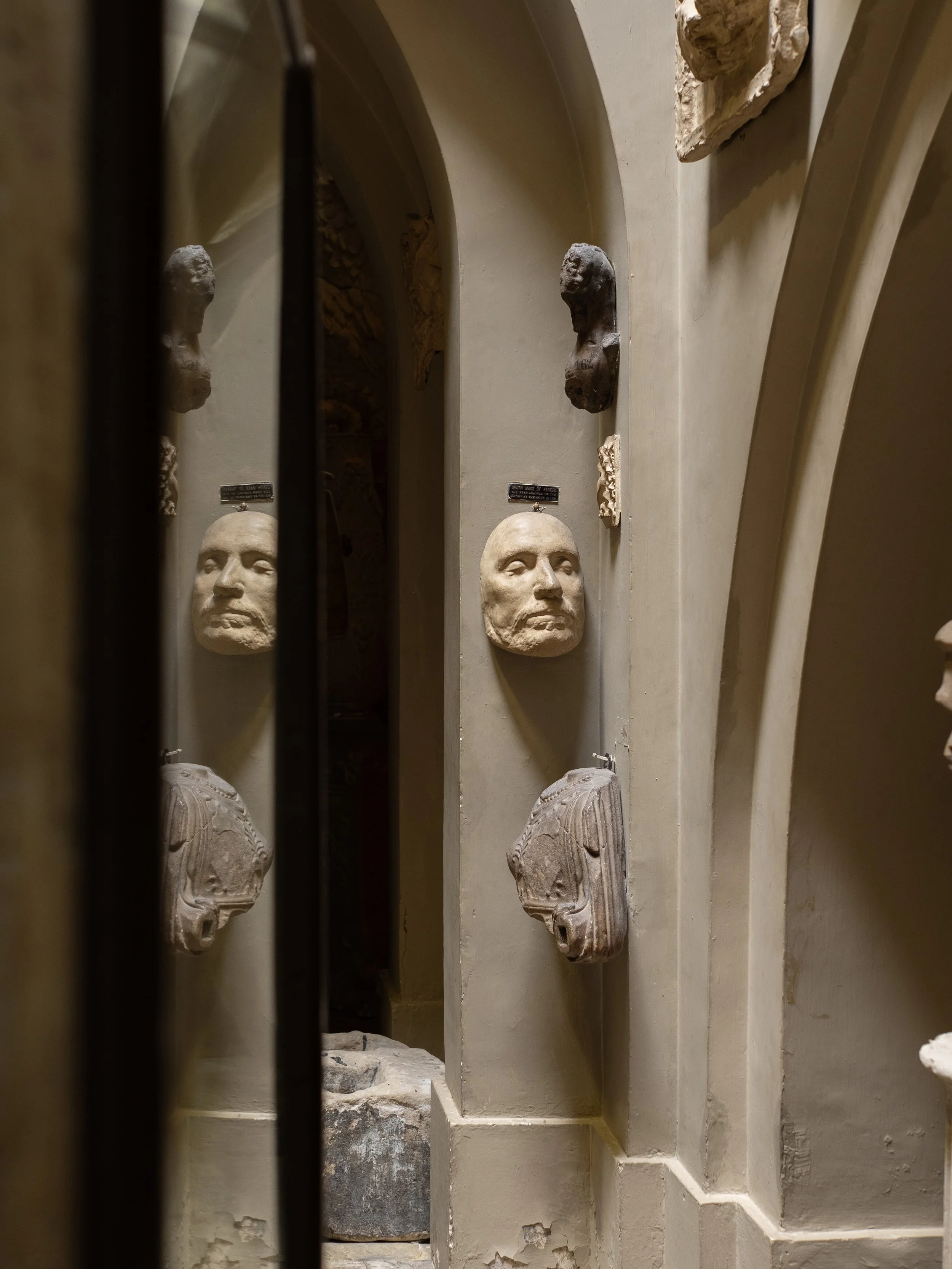
While the museum feels like a playground for an eccentric genius, there is a sadness to it. The Monk’s Parlour in the basement is a mock Gothic suite where Soane invented a fictional alter ego, "Padre Giovanni," to inhabit the space. He filled it with medieval casts and gargoyles, creating a hermitage for a hermit who didn't exist.
Just outside in the Monk's Yard, you will find the grave of the only creature Soane seemed to trust entirely: his wife’s dog, Fanny. The headstone reads "Alas, Poor Fanny," a dramatic Shakespearean send off for a terrier.
Sir John Soane’s Museum - Michael Adair
The Model Room
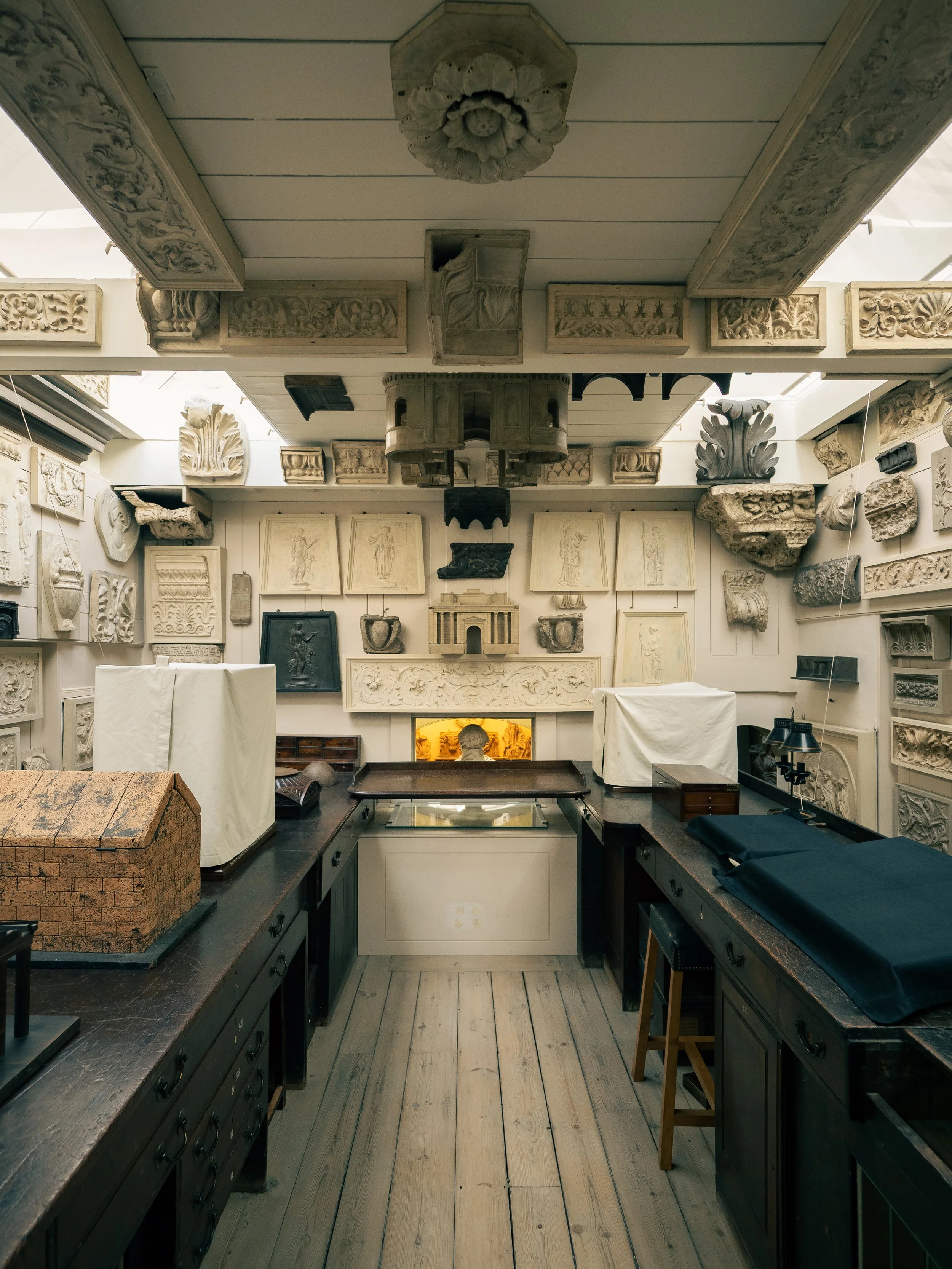
Do not leave without going upstairs to the Model Room. Soane was obsessed with building scale models of ancient structures to teach his students. The room is dominated by a massive cork model of the ruins of Pompeii, which allows you to see the layout of the Roman city as it looked in the 1820s. There are also exquisite plaster models of his own buildings, including the Bank of England.
Since the actual Bank of England has been largely rebuilt and ruined by modern renovations, this model is the only way to see Soane's original masterpiece as he intended it.
The Family Feud
Why did Soane go to such lengths to lock this house in time? It wasn't just ego; it was spite.
Soane had a lifelong feud with his son, George, who was a gambler, a debtor, and a critic. The relationship hit rock bottom when George wrote an anonymous article in a newspaper trashing his father’s architecture. Soane’s beloved wife, Eliza, was so upset by the article that she reportedly exclaimed, "These are George's doings. He has given me my death blow," and died shortly after.
Soane never forgave him. He spent the rest of his life ensuring that the house would become a museum for the nation, explicitly so that George wouldn't inherit a single brick. The house stands today as a monument to genius, but also as the world's most elaborate act of disinheriting your child.
The Practical Details
Admission: Free (Soane insisted on this in the Act of Parliament). Timing: Get there right when it opens at 10 am. Because the corridors are tight, they limit the number of people inside, and the line can get long.
Candlelight Tours: Once a month, the museum opens in the evening and is lit entirely by candlelight. It is incredibly atmospheric, though spotting the smaller objects becomes a challenge.
Bags: You cannot bring large bags or backpacks inside. There are tiny lockers, but if you show up with a suitcase, you will be turned away. They are serious about this; there are 45,000 breakable objects and very narrow aisles.
If you only visit one museum in London, make it this one. It is a glimpse into the mind of a man who tried to collect the world, and for a few city blocks, actually succeeded.
*Please note, I was there on a private tour where photos were allowed. Normally photos are not allowed due to the tiny space between all the artefacts.